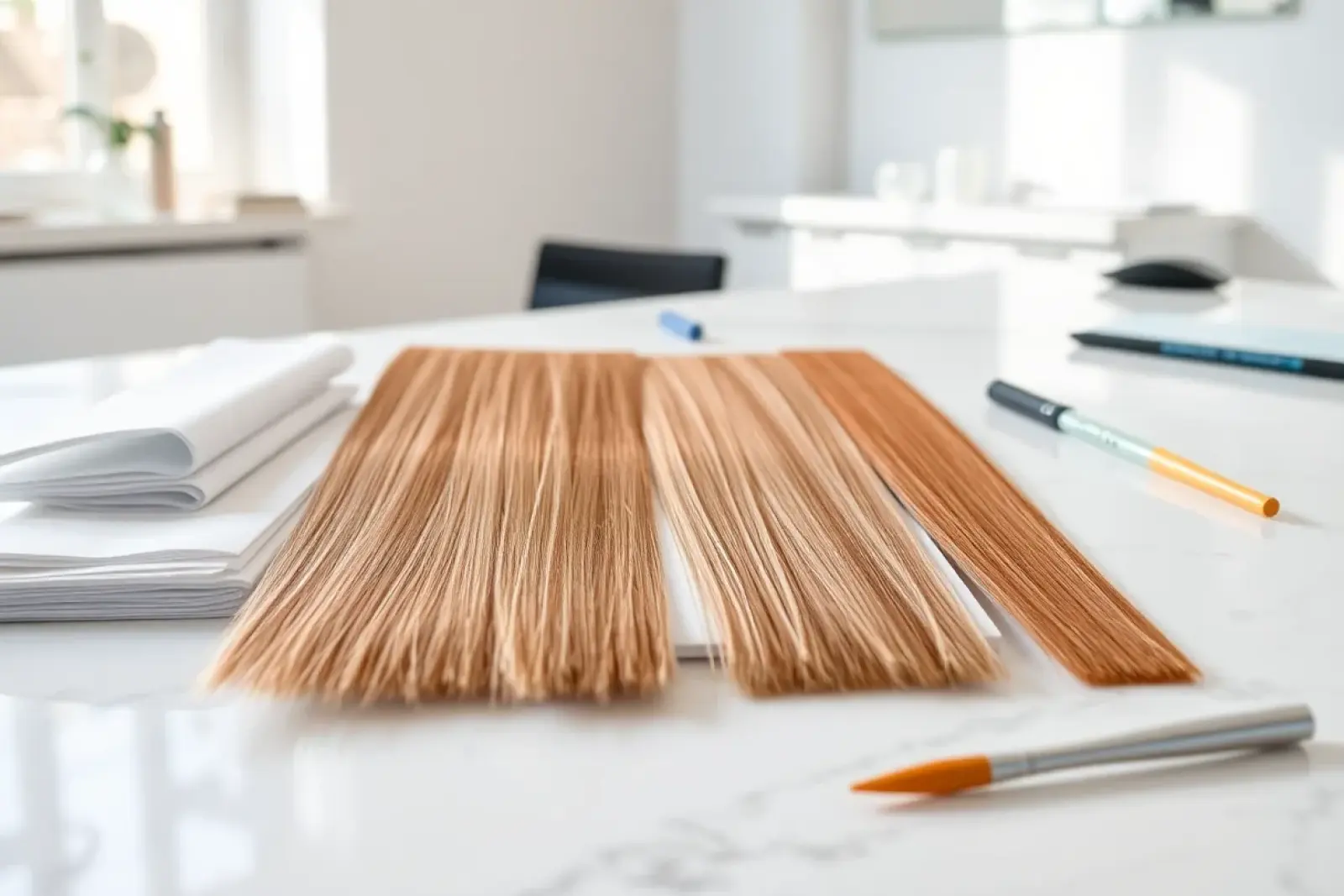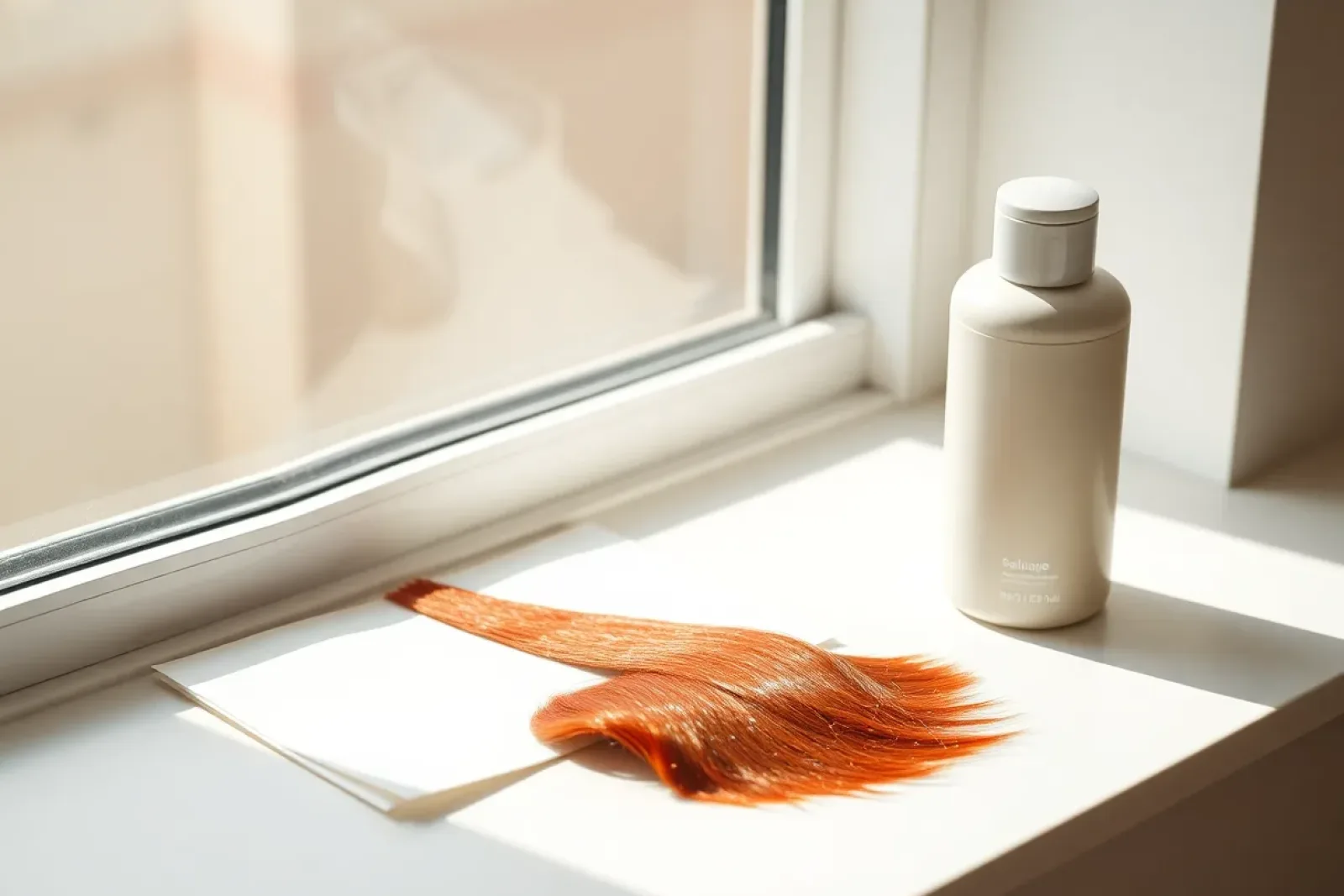
Colour mostly disappears through frequent washing in hot water: heat opens the cuticle and pigment rinses away. Sulphates come next, then heat above 200 degrees, then sun and chlorine. Red pigments go first and are visibly paler after only four to six washes.
Fading is not random and it is rarely the salon's fault. It follows a fixed order of magnitude, and knowing that order means two changes will do more than five new products.
It helps to separate two processes that look identical. In one, pigment washes out of the hair — that affects toners and red shades above all. In the other, pigment stays inside but is destroyed by light and heat, so it loses its colour where it sits. Different measures work against each.
The causes in order of impact
| Cause | What it does | The fix |
|---|---|---|
| Daily washing | every wash costs pigment | stretch the interval, dry shampoo |
| Hot water | opens the cuticle | wash lukewarm, rinse cool |
| Sulphate shampoo | strips pigment and lipids | colour-safe formula |
| Heat above 200 degrees | destroys pigment in place | 150 to 180 degrees, protection |
| Sun and UV | bleaches from the outside | hat, UV leave-in |
| Chlorine and salt | pulls yellow and green | wet hair first, rinse after |
| Hard water | leaves a dulling film | clarifying treatment, shower filter |
The order matters. Washing daily in hot water costs more colour than blow-drying and straightening twice a week. Start at the top of the table: the first three rows cost nothing and work immediately, while the lower ones need products or habit changes for less return.
One factor is missing from the table because people rarely think of it: friction. A cotton towel rubbed over wet hair roughens the cuticle mechanically, and a cotton pillowcase does the same across eight hours of sleep. Microfibre for drying and satin or silk for sleeping cost little once and work every night.
Two degrees of cooler water keeps more colour in your hair than the most expensive product on the shelf.
Why red goes first
Pigment molecules differ in size. Red pigments are comparatively large and therefore do not sit as deep in the fibre — they are closer to the surface and rinse out first. Brown and ash tones sit deeper and hold longer.
In practice a strong copper or red is visibly paler after four to six washes, while a dark ash brown looks almost unchanged after the same number. That is chemistry rather than a quality problem with the colour.
So anyone wearing red should plan for two things: a colour depositing mask at home that tops up pigment every second wash, and a noticeably longer wash interval. Together they often double the visible lifespan.
And why blonde seems to turn warm
On blonde it is not the colour that fades but the opposing tone. Underneath lightened hair sit warm residual pigments, and the toner only neutralises them. When that neutraliser washes out, the yellow comes back. The detail is in what toner does after bleaching.
The role of porosity
Porous hair does not hold colour. The cuticle does not lie flat, so pigment gets in quickly and leaves just as quickly. That is why the same colour fades at different rates on two people.
Porosity comes from bleaching, from heat, from mechanical friction and simply from the age of the hair. Ends are almost always more porous than roots, and that is exactly where colour looks washed out first.
A simple test: drop a clean, dry hair into a glass of water. If it sinks within a few minutes it is porous. If it floats for a long time the cuticle is intact.
What a salon does about it before colouring
If the lengths are much more porous than the root, colour will land darker and cooler there than planned and disappear faster. So in those cases salons even it out first: the porous sections get a filler or pre-pigmentation before the actual colour, so they take pigment evenly.
That is not an upsell, it is the difference between colour that lasts four weeks and colour that lasts ten. If your colour reliably fades in patches, raise it before the next appointment — it is one of the few causes that can only be fixed in the chair and not at home. How far the damaged section reaches is covered in split ends.
Related articles
What makes the biggest everyday difference
Three changes work immediately and cost nothing.
- Stretch the wash interval. Daily to every other day is around 28 fewer washes over eight weeks.
- Lower the water temperature. Wash lukewarm and finish with a cool rinse, which visibly closes the cuticle.
- Do not wash straight after colouring. The first 48 hours decide how firmly the tone sits.
Then come the product decisions: a shampoo without harsh surfactants, a mask once a week, and heat protection before any tool. Which shampoo types exist and what each is for is covered in choosing a shampoo, and the right interval in how often to wash.
Colour depositing masks: the underrated middle step
A colour depositing mask is a conditioning mask carrying direct dyes. It lays down a little pigment with every use, without developer and without opening the cuticle. For red, copper and chestnut tones it is the single most effective way to hold depth between appointments.
Two caveats. The mask has to match the colour or it will shift the tone, so ask in the salon, where it usually exists in the shade family of your actual formula. And it transfers a little onto towels and light pillowcases every time. Gloves and a dark towel solve that.
When it really was the appointment
Not every loss of colour is self-inflicted. Three situations are worth raising at the next visit.
The colour was already noticeably paler after the very first wash. That points to processing time being too short, or a shade chosen too light for the starting point.
The colour faded unevenly, in bands or patches. That points to differing porosity that should have been evened out before the colour went on.
Each appointment holds less well than the one before. That is accumulating damage, and the route there runs through a pause and a cut rather than another colour service.
Bring a photo from the day after and one from today. Salons record colour formulas; at salons that take online bookings the history is usually stored digitally and can be checked against what you observed. Mention what you have used at home too — direct dyes, colour masks and purple shampoo change how the next colour behaves, and that information decides the developer strength.
The order is wash frequency, temperature, shampoo, heat, sun. Starting at the top gains the most, usually two to three weeks of depth for no money at all. If colour still disappears within days despite all of it, a porosity check before the next colour appointment is the sensible next step.
Booking your next cut without a phone call?
This link is meant for your salon, not for you. If you would rather book online than wait for a callback, pass it on at your next appointment.