Balayage lasts three to six months before the next lightening appointment, because the root fades out softly and no line appears. The tone lasts less: after six to ten weeks it reads warmer and needs a toner. On very dark natural hair expect closer to three months, on light brown up to six.
Two different things are being measured when people ask how long balayage lasts, and they run on different clocks. Lightening is permanent — hair that has been lifted never darkens again on its own, it only grows out. The tone laid over it is not permanent at all; it rinses away a little with every wash.
So there are two answers. One concerns the big appointment where new pieces are lightened. The other concerns the refresh in between, which comes round far more often, takes a fraction of the time and costs a fraction of the money.
The two clocks of a balayage
The first clock runs at the root. Hair grows about 1 to 1.5 centimetres a month, so three months is roughly four centimetres of natural hair and six months is eight. Because balayage barely carries product at the root, that regrowth stays invisible for a long time. Eventually the lightened area sits so low that the weight of the colour is wrong — that is the moment for the next lightening appointment.
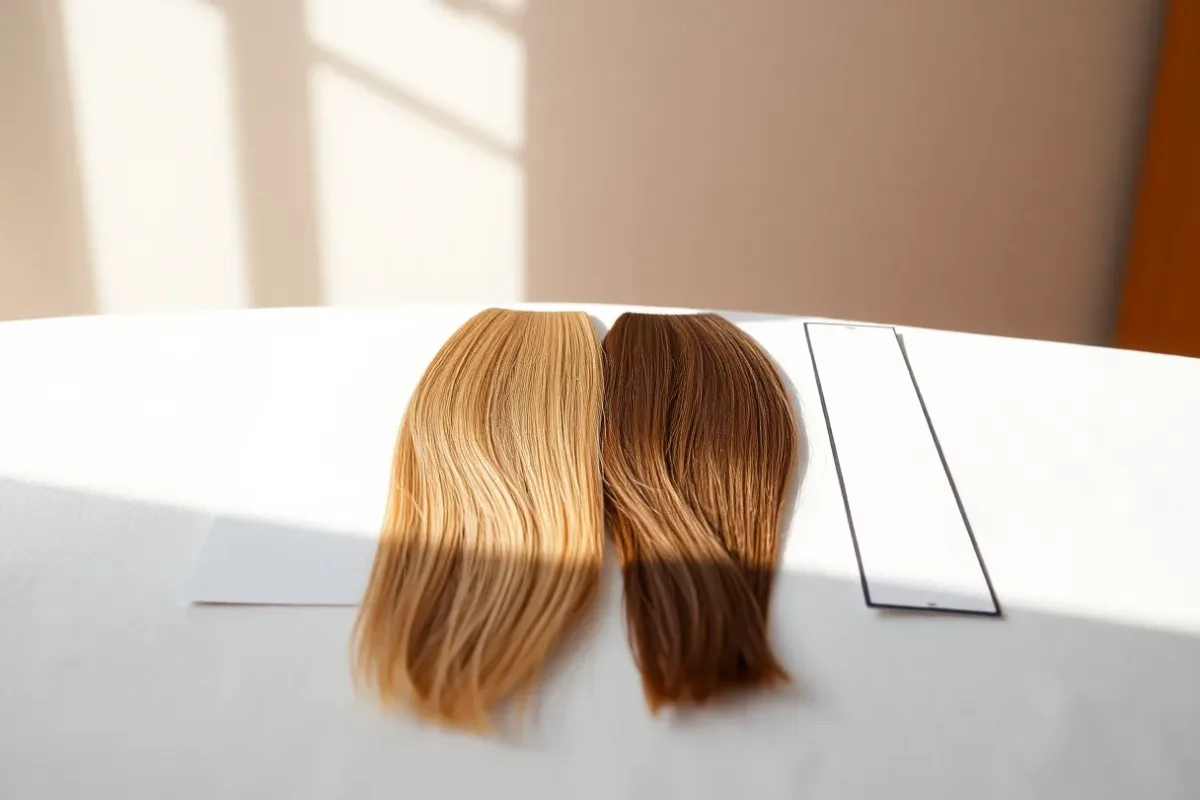
The second clock runs on tone. The toner applied after lifting is usually demi-permanent and lasts 4 to 6 weeks, or roughly 20 to 28 washes. After that the underlying yellow of lifted hair comes back through and cool ash turns into a warmer beige.
Why the tone turns rather than simply fading
Lifted hair is never neutral. Under the melanin that bleach removes sit residual warm pigments — orange on dark hair, yellow on lighter hair. Toner lays the opposite colour over the top: violet against yellow, blue against orange. When that opposite washes away, the warm underlayer reappears. That is not a fault in the colour, it is how the colour works.
Which is why asking for a cooler toner next time rarely solves it. Washing less often and topping the tone up at home does far more.
The lightening grows out and the tone washes out. Those are two separate clocks.
What shortens it
The culprits are almost always the same, and they act on tone rather than on the lightening.
| Factor | Effect on the tone | What helps |
|---|---|---|
| Daily washing | costs 2 to 3 weeks | stretch the interval, dry shampoo |
| Hot water | opens the cuticle | wash lukewarm, rinse cool |
| Sulphate shampoo | strips pigment faster | colour-safe formula |
| Heat above 200 degrees | dulls and fades the tone | 150 to 180 degrees, heat protection |
| Sun, salt, chlorine | pulls yellow and green | wet the hair first, use a leave-in |
| Porous ends | tone rinses out in days | trim the ends, use a mask |
None of this is particular to one technique, but how soon the warmth shows depends on where the colour was placed to begin with — balayage or highlights sets the two side by side on how they grow out.
What stretches it out
The most effective change is the least glamorous one: wash less often. Moving from daily to every other day typically buys two to three weeks of depth. Water temperature comes second and product choice third.
Purple shampoo is not a substitute for the toner, it is its extension. Once or twice a week, 2 to 5 minutes, starting at 2 minutes the first time. Used daily it turns the most porous sections — usually the ends — faintly lilac. Where on the head to put it, and how to undo an overdose, is covered in how to use purple shampoo.
The first 48 hours after the appointment
The cuticle closes over the two days after the service, and the tone sits at its loosest during that window. Washing the same evening rinses away part of what you just paid for. Wait 48 hours, skip the sauna and the pool, and do not tie the hair back tightly.
The same applies to the first vacation after the appointment. Chlorine and salt water shift the tone within days. Soaking the hair in clean water and applying a leave-in before swimming means it is already saturated and cannot absorb pool water.
One thing you cannot stretch is the calendar. If a wedding or a party falls late in the toner's life, get the refresh in before the date rather than after it, so the fresh weeks are the ones on show — and the head start varies with the slot you want: a few days for a weekday afternoon, up to two months for a Saturday morning.
Related articles
How colour and length change the answer
The bigger the gap between your natural base and your target, the sooner you are back — not because the lightening disappears faster, but because the regrowth is more obvious.
- Very dark base with bright blonde: back in 10 to 14 weeks.
- Mid brown with caramel balayage: 16 to 20 weeks.
- Dark blonde with soft light pieces: 20 to 26 weeks.
- Very long hair: lasts longer visually, because the regrowth is a smaller share of the length.
- Chin-length bob: lasts less, because four centimetres is a quarter of the length.
Why the ends decide the lifespan
Ends are the oldest part of the hair. On shoulder-length hair they are two and a half to three years old and have survived every wash, brush and hot tool since. After lightening they are also the most porous part of the head, so the toner leaves there first.
Trimming one to two centimetres every ten to twelve weeks therefore extends how long the tone reads clean, because the most porous section is regularly removed. Keeping every millimetre of length means toning more often instead. That is the real arithmetic behind the advice that cutting is good for colour.
When the next appointment is actually due
Three signs beat the calendar. The lightened area now starts below the chin when it used to start at ear level. The tone stays dull even straight after a toner. And the ends are bright while the mid-lengths look flat, which is a structure problem rather than a colour problem.
Do not leave the lightening appointment to the last minute. Balayage needs three to four hours, and those blocks are booked out weeks ahead in many salons. At salons that take online bookings you can see the duration and the free blocks directly, and schedule the toner in between at the same time.
What to bring to the follow-up
- A photo from the day after the last appointment, so the stylist can see how the tone has moved.
- Whether you have used purple shampoo, a colour mask or any direct-dye product since.
- Hair that is a day old rather than freshly washed. Clean is not necessary and is unhelpful before bleach.
- Time. Budget generously if a toner or a cut is going on the same appointment.
Leaving it longer than six months turns the next visit from a refresh into a rebuild, with the duration and price that implies. That is the usual reason balayage seems to get more expensive in year two: the price did not change, the interval did.
Plan for two kinds of appointment rather than one: lightening every three to six months and toning every six to ten weeks. Stretching the wash interval, washing lukewarm and keeping hot tools below 180 degrees pushes both further out. And when the tone gives out weeks earlier than it used to, look at the ends before you look at the toner.
Booking your next cut without a phone call?
This link is meant for your salon, not for you. If you would rather book online than wait for a callback, pass it on at your next appointment.