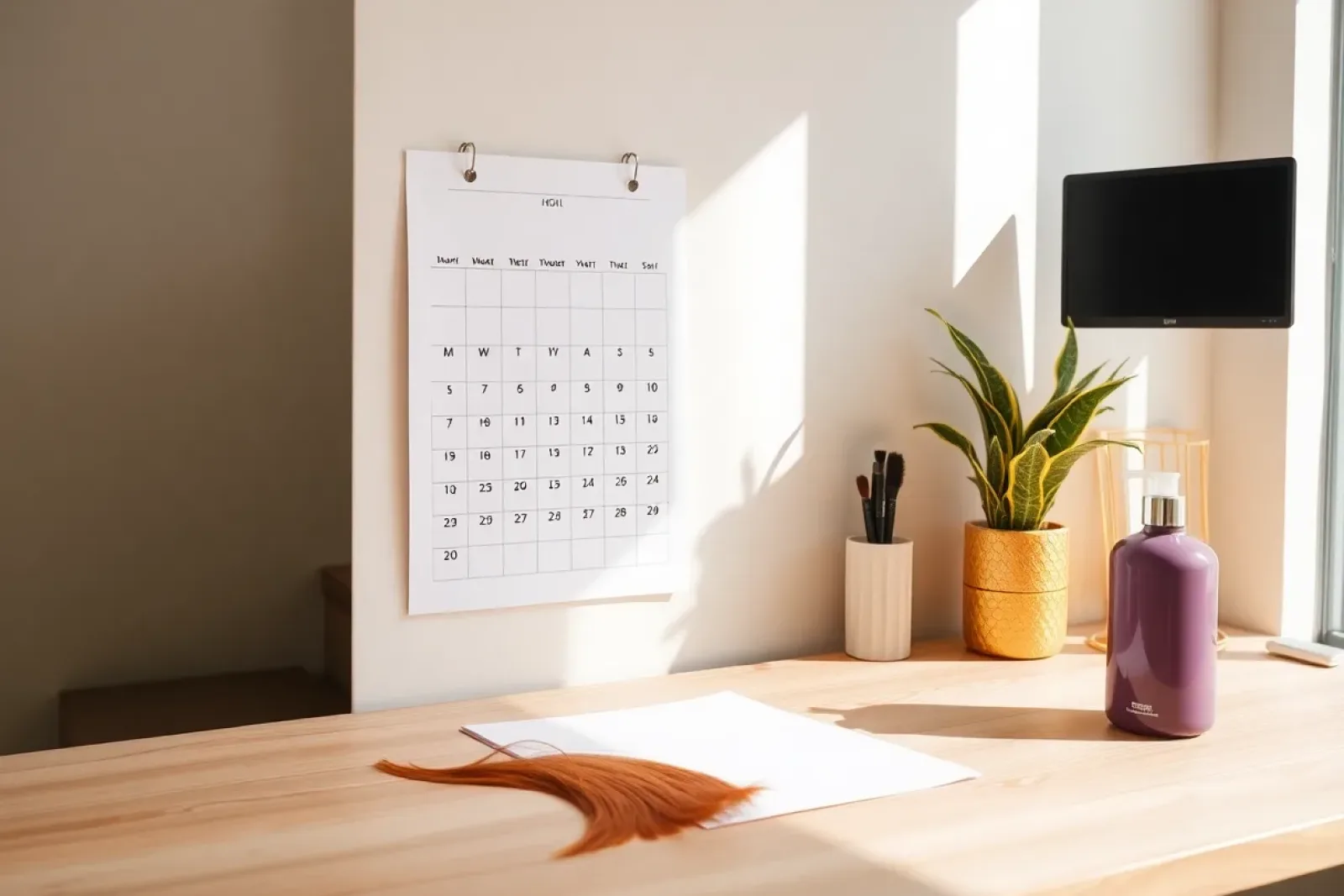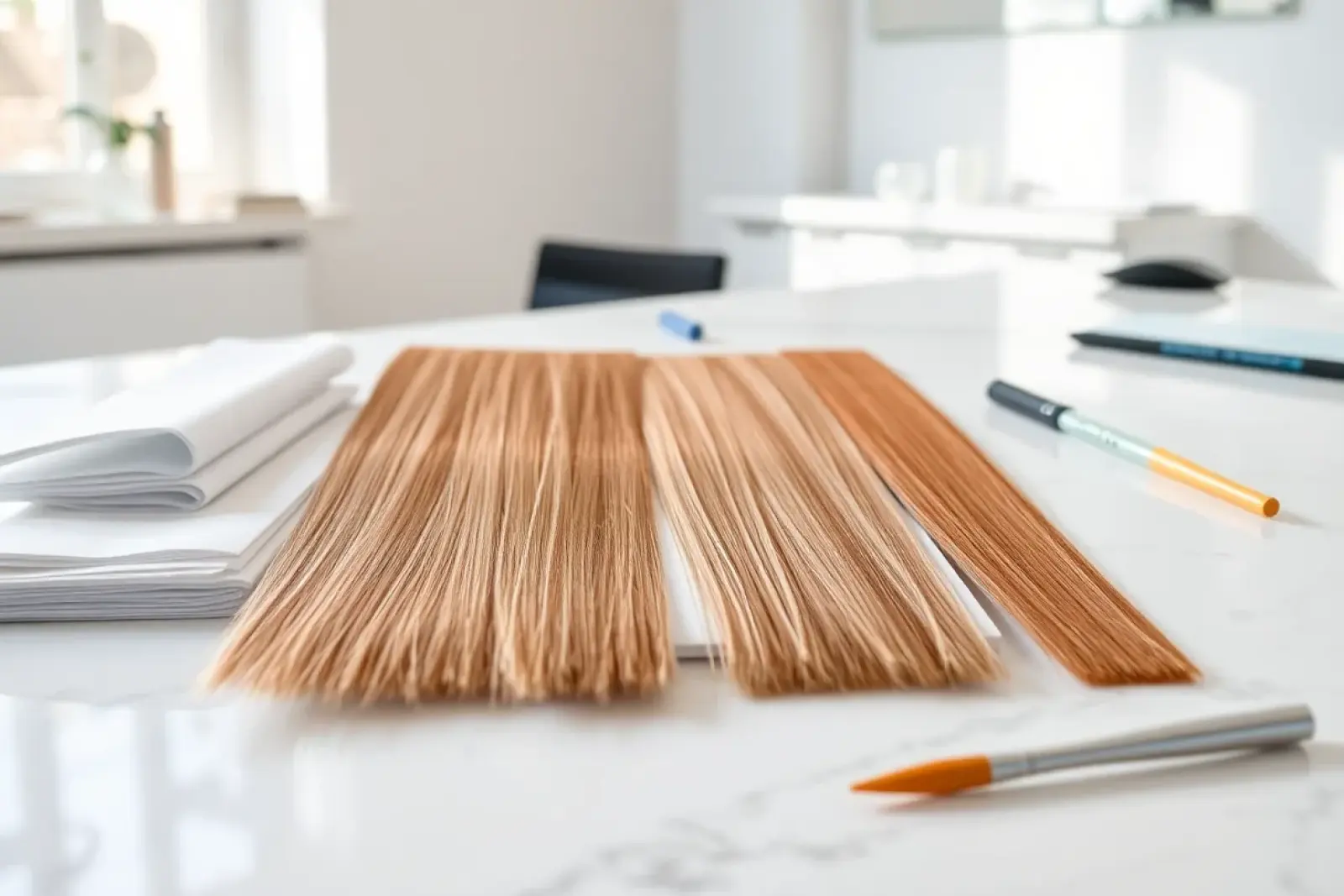
Balayage is painted on freehand and fades softly towards the root; foil highlights start at the root and lighten evenly. Choose balayage if you want to come in rarely: the next lightening appointment lands after three to six months, while foils need refreshing after six to eight weeks.
Both techniques lighten hair. They differ in where the product sits and how sharp the edge is, and that single difference decides far more than the appointment itself. It decides what your roots look like in three months and how often you will be sitting in the chair because of it.
The words get mixed up constantly. In everyday use, highlights almost always means foils: sections of hair laid onto foil or meche, painted from root to tip and wrapped. Balayage comes from the French for sweeping, and the lightener is brushed onto the surface of the hair. Between the two sit hybrids such as babylights, foilyage and airtouch, which borrow from both.
What actually happens during the application
With foils, the stylist takes thin sections, lays each one on a sheet of foil, applies bleach or colour from root to tip and folds the packet closed. The foil traps heat and moisture, so the product works evenly and predictably. That makes foils strong wherever precision matters: even brightness across the whole head, first greys disappearing into lighter pieces, fine babylights close to the parting.
Balayage works without foil. The lightener sits on the surface of the section, very thin near the root and heavier towards the ends. More product stays where the hair is thickest and it thins out going up. That gradient is exactly what you see growing out later.
There is a practical consequence. Balayage usually cannot reach the same brightness as a foil, because without the foil there is less heat and the stylist has to rinse earlier. If your natural base is level 4 and you want a pale blonde, foils are almost unavoidable — and rarely in one sitting, which is why that first appointment is worth booking further ahead than a cut.
One more difference that rarely comes up in the consultation: with foils you are buying a result, with balayage you are buying a state. A result has to be restored on schedule. A state is allowed to keep developing.
The technique does not decide the result. Your starting colour and the time you are willing to spend do.
The difference only shows after twelve weeks
Roots are where the two techniques genuinely part ways. Scalp hair grows roughly 1 to 1.5 centimetres a month. With foils that growth creates a visible line: natural colour above, lightened hair below, a border in between. At six to eight weeks it becomes obvious; by twelve weeks it is hard to ignore.
Balayage has no such line, because there was barely any lightener at the root in the first place. What grows in simply reads as a naturally deeper root. That is why many people keep balayage for three to six months without it looking neglected.
| Technique | Next appointment | How the root grows out |
|---|---|---|
| Foil highlights | 6 to 8 weeks | visible line at the root |
| Babylights | 8 to 10 weeks | fine, softer line |
| Balayage | 3 to 6 months | soft gradient, no line |
| Foilyage | 3 to 4 months | brighter than balayage, still soft |
| Root colour | 4 to 6 weeks | hard line, must be redrawn |
How long the lightening itself lasts, and when only the tone needs refreshing, is covered in how long balayage lasts.
Which hair suits which technique
Balayage lives on movement. On layered, wavy or curly hair it earns its money, because the lighter pieces surface as the hair falls. On very short hair there is not enough canvas, and on blunt, poker-straight hair it can read patchy rather than soft.
Foils are the better answer when you want even brightness, when first greys should visually disappear, or when the hair is short. They are also the technique of choice if you already have dark colour in your hair: old pigment is easier to control under foil.
Where the hybrids sit
- Babylights: very fine foils, read as naturally sun-lightened hair, expensive in chair time.
- Foilyage: painted freehand, then wrapped in foil — brighter than balayage, still soft at the root.
- Airtouch: loose hairs are blown out with a dryer and only the rest is lightened; extremely soft, extremely long appointment.
- Money piece: only the face-framing pieces, the cheapest way to try brightness at all.
If your hair is fine and you are worried about seeing scalp through the lightened sections, mention it before the appointment. Fine hair shows the placement more clearly, so fewer and finer pieces usually look better than a full head.
Related articles
Salon time, price and what drives both
A full head of foils typically takes two to three hours, balayage three to four, airtouch up to five. Price follows that time, plus the amount of product, which climbs steeply on long, dense hair.
As a rough guide across the US in 2026: foils commonly land between 150 and 300 dollars, balayage between 200 and 400 dollars, a money piece between 75 and 150 dollars. Those are ranges, not quotes — why the same service costs differently two streets apart is explained in why colouring prices vary.
Why the quoted time varies so much
Three things drive the appointment length, and none of them is how fast the stylist works. Density comes first: thick shoulder-length hair needs twice as many sections as fine hair. Starting depth comes second: the darker the base, the longer the bleach has to work and the more often it is checked. Third is whether a toner follows, which adds another 30 to 45 minutes in the chair.
So when you book, ask about the time budgeted rather than the price. Anyone quoting two hours for balayage on long dark hair will either not reach the agreed brightness or will run out of time.
Do the maths per year, not per visit. Seven foil appointments at 220 dollars is 1,540 dollars. Two balayage appointments at 350 dollars plus two toners at 65 dollars is 830 dollars, for far fewer hours in the chair. On short hair both figures drop and the gap narrows, but the direction stays the same.

How to decide in the consultation
Bring two or three photos, and include one you specifically dislike. That narrows things down faster than any description. Say how often you realistically want to return and how much styling you do — balayage looks best on hair worn down and moving, and almost disappears in a tight ponytail.
Be honest about your colour history even if it is two years old. Henna, direct-dye pigments and dark box colour change the outcome completely. If there is any doubt, ask for a strand test rather than a promise.
Five questions that shorten the decision
- How often will I really come back? Under eight weeks points to foils, over twelve to balayage.
- How light do I want to go? More than three levels above your base usually means foils.
- How do I wear my hair? Down and moving shows balayage; tied back hides it.
- What is already in my hair? Old colour, henna or direct dyes change the answer entirely.
- What is my yearly budget? Not the single appointment, the twelve-month total.
If you want to see how long each service is booked for before you commit, salons that take online bookings usually publish the duration next to each service. How to put the request into words at the chair is covered in explaining what you want.
It comes down to three things: how light, how often, and how long your hair is. The brighter the target, the more likely foils. The rarer the appointment, the more likely balayage. If you cannot decide, a money piece is the smallest sensible step — either technique can be built out from it next time.
Booking your next cut without a phone call?
This link is meant for your salon, not for you. If you would rather book online than wait for a callback, pass it on at your next appointment.