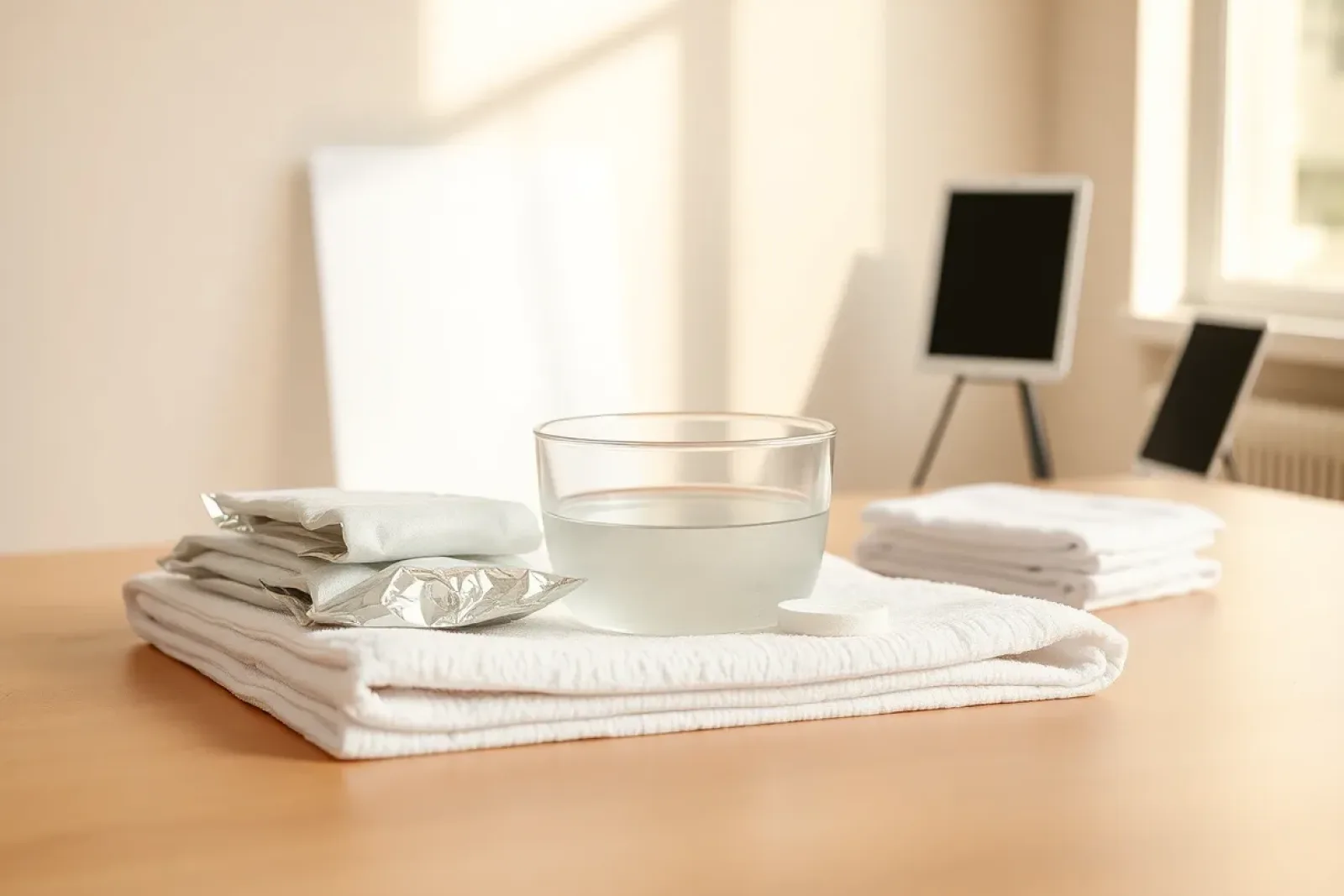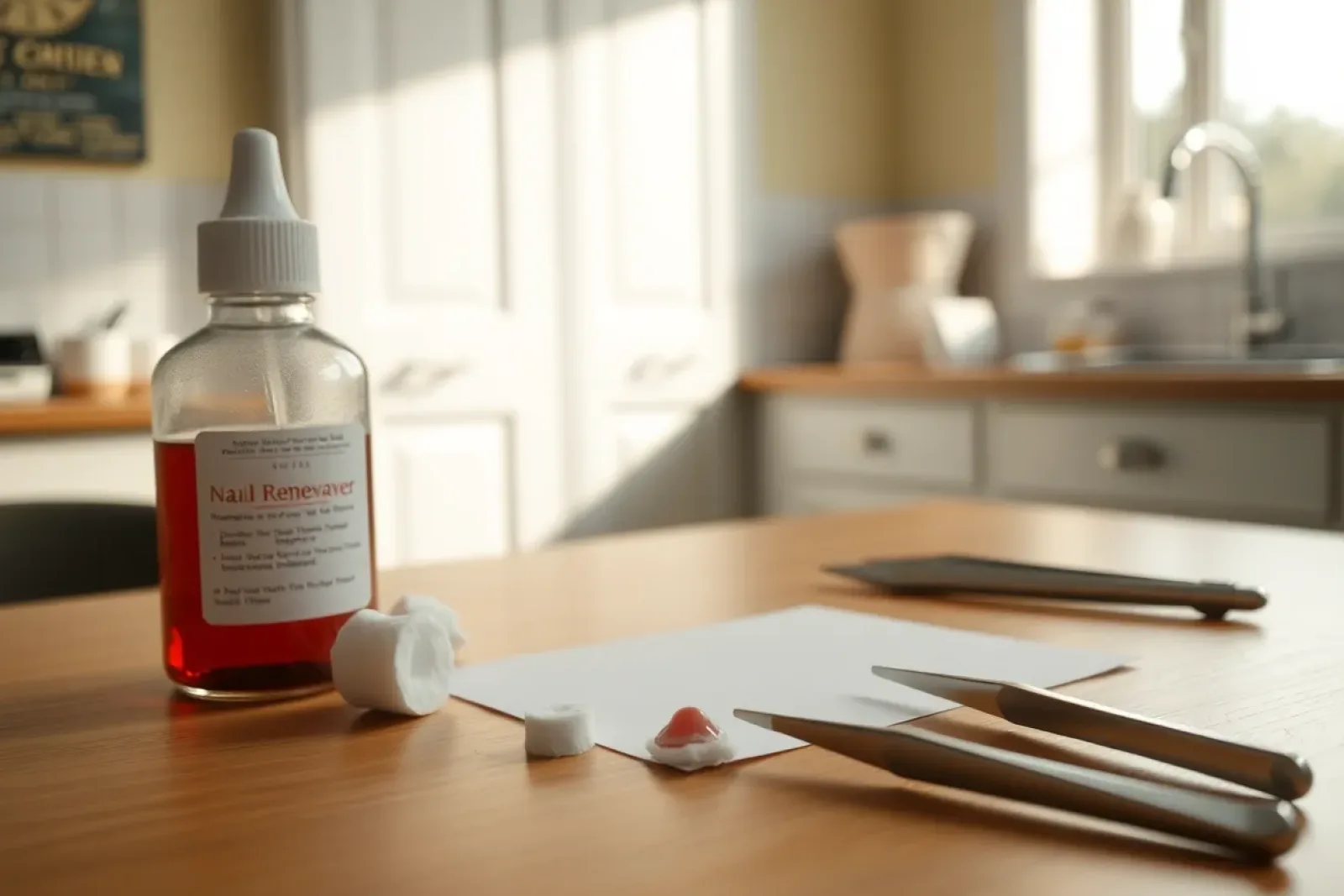
When you peel a set off, it takes the top layer of your nail plate with it. That layer does not repair itself; it has to grow out, which takes four to six months on the hand. On top of that, ordinary drugstore nail polish remover will usually not dissolve gel at all.
The scenario is always the same. One nail lifts at the edge, it snags on a sweater, the next appointment is ten days away, and at some point you find yourself picking at it on the sofa. It feels satisfying, it takes three seconds, and it is the single most common cause of thin, sensitive nails.
This article is not a guide to doing it better yourself. It explains why that shortcut is so expensive, and what genuinely helps in the cases where you really cannot get to a salon. Those cases exist, and they deserve a usable answer rather than a flat prohibition.
1. What peeling actually does
The nail plate is built from many thin layers of hardened keratin stacked like compressed paper. Enhancement product does not bond chemically to it; it grips mechanically into the lightly roughened surface of the top few layers. That grip is remarkably strong — usually stronger than the bond holding those keratin layers to each other.
So when you lever a set off, it is not the bond between nail and product that gives way. It is the nail. The uppermost layer stays stuck to the gel and comes away with it, and what remains is a thinner plate with a rough, often whitish surface. Those are exactly the white patches people so often blame on a vitamin deficiency.
The damage is never evenly spread either. Because product holds harder in some spots than others, the tears end up at different depths. The nail does not just get thinner, it gets uneven — and an uneven surface holds product worse next time, which keeps the whole cycle running.
There is one more effect you only notice weeks later. Because the torn areas do not sit at the same height, they do not grow out as a clean line but as a patchy zone where colour and product behave differently. That is why a single peel can make several consecutive appointments feel unsettled.
Three seconds of pulling costs you four to six months of growth. No other nail mistake has a ratio that bad.
2. Why drugstore remover is not enough
Nail polish remover comes in two kinds. The acetone-free version usually contains ethyl acetate and is meant for regular polish. It will not dissolve gel polish, and it certainly will not touch builder gel. People who try it rub for twenty minutes and conclude that pulling is the only way — so the mistake comes from the wrong product rather than from impatience.
Even pure acetone is not enough on its own. It can only reach the product once the sealed top surface has been broken, and it has to sit under foil or a clip for several minutes without evaporating. Miss either step and something happens at the surface while nothing happens underneath.
And even with everything done correctly, most builder gels are not soluble in acetone at all. Salons file them off because there is no other route. Soaking them at home means waiting for a reaction that, by design, is never going to come.
A quick check helps: if the bottle says acetone-free, it is useless for gel polish and enhancements no matter how long you rub. If it says acetone, it could in theory work, but only with abrasion, wrapping and time. And if your salon has told you your product gets filed off, neither route applies.
3. Four common home methods and what they leave behind
It is worth putting the usual attempts side by side. All four come from the same frustration, and all four end the same way.
| Method | What happens | Recovery |
|---|---|---|
| Levering with a thumbnail | top keratin layers tear away | 4 to 6 months |
| Biting it off | the split runs into the nail bed, skin is broken | weeks to months |
| Clipping with nail clippers | hairline cracks in the product, plate splinters | 2 to 4 months |
| Soaking without abrading | nothing dissolves, then it gets pulled | 4 to 6 months |
Look at that last row: trying to do it properly often ends worse than not trying at all, because the wasted effort is followed by the frustrated grab. Anyone who starts at home should know in advance where they will stop.
Related articles
4. What to do when something breaks while you are out
For an actual emergency the list is short and unglamorous. A broken or split nail gets filed, not pulled: smooth the sharp edge in several short strokes until it catches on nothing. That usually settles the immediate problem entirely.
If a nail lifts at the edge, file the edge smooth as well and secure the spot with a narrow strip of tape or a bandage for a few hours. It does not look elegant, but it stops the gap from opening further as you pull on a coat or a glove.
What you should not reach for is superglue, craft adhesive or hardware shop repair glue. None of them holds reliably on gel, they seep into the gap, and they make the eventual correction more work. Ring the salon instead — repair slots are short, usually cost between 10 and 20 dollars, and are squeezed in at short notice almost everywhere.
A small kit in your bag covers most of this: a fine file, a piece of tape and a bottle of nail oil. That handles nearly any damage for a few days and removes the exact situation where, with no tools and no patience left, the thumbnail wins.
5. When you genuinely cannot get to a salon
There are situations where no appointment is possible: moving house, travelling, a longer illness. In those cases the best answer is not removal but tolerance. An enhancement growing out looks untidy but does no harm, provided nothing lifts and you shorten it and keep the edge smooth.
Once it has grown out far enough for the leverage to bother you, take the length back to just past your fingertip. That removes almost all of the load. If individual nails lift, file the raised edge smooth rather than peeling it — that single habit decides what state your nails are in when the break ends.
When you do get back to a salon, say honestly what happened. Whether a set was peeled, bitten off or simply worn for months changes how the next build is prepared. That information is not a confession, it is working material — and it stops a already thinned nail from getting the standard preparation.
If you land in these situations regularly, treat it as a hint about length. Enhancements that constantly catch on things are usually two or three millimetres longer than your daily life allows. Going one step shorter cuts breakages, repair visits and exactly these moments where no good option is within reach.
Home removal fails on the same two points every time: the remover does not dissolve the product, and it ends in pulling. The price is months of thin, sensitive nails. Next time a lifted edge annoys you, file it smooth and phone the salon — a repair slot rarely takes more than twenty minutes.
Booking your infill without a phone call?
This link is meant for your nail studio, not for you. If you would rather set your infill or a new set online, pass it on at your next appointment.