The product itself does not damage your natural nail. Damage happens in three places: over-preparing the surface before the build, filing with too much pressure, and peeling a set off instead of soaking it. A nail plate that has been thinned does not heal — it grows out, which takes four to six months on the hand.
The nail plate is made of many thin layers of hardened keratin stacked on top of each other, about half a millimetre thick on the fingers. It is dead material. That is exactly why nothing regenerates here: whatever gets filed away does not come back, it only gets pushed forward.
Which is why the distinction between product and technique is worth knowing. Understand it and you can wear enhancements for years without your own nails suffering — and you will spot it immediately when something is going wrong.
1. What the product does and does not do
Gel, acrylic and gel polish sit on top of the nail plate; they do not soak into it. They cannot draw nutrients out of it, because nothing there is being fed any more, and they do not suffocate it — nails do not breathe in the first place, they are supplied by the blood vessels under the nail bed.
What does happen is that moisture builds up under a sealed layer. That is why a freshly bared nail often looks paler and feels softer than you expected. The impression usually settles within a few days as the moisture content balances out again.
So the infamous post-removal state — thin, bendy, sensitive — is almost never the product. It comes from the steps immediately before and after it.
The term nail bed gets muddled too. The nail bed is the living, blood-supplied skin underneath the plate, and it is sensitive. The plate itself slides across it and is pushed forward from the matrix hidden under the skin. So when someone claims a product can rebuild the nail plate from outside, that contradicts the anatomy: repair happens only where new material is formed, several millimetres beneath the cuticle.
The nail plate is dead keratin. It does not heal, it only grows, and that turns every millimetre into a decision.
2. The three moments where damage happens
The first is preparation. For product to grip, the shine of the nail plate has to be broken. A buffer or a fine file is entirely enough for that. If a coarse electric file is used across the whole surface instead, several keratin layers disappear at once and the plate starts the next few weeks thinner than it needs to be.
The second is pressure during infills. An e-file works through rotation speed, not force. Pushing it into the nail generates heat and removes more than intended. Round hollows or ring shaped grooves in the plate are the classic signature.
The third is removal, and it is the most common cause of all. Levering a set off takes the top layer of the nail plate with it. A single time can cost you weeks of visible recovery.
A fourth mechanism is less common but works the same way: clipping an enhancement with nail clippers. A clip sends a shock wave through the product that can drive hairline cracks all the way into the bond line. That is why enhancements are filed rather than clipped. If you must shorten between appointments, use a file and work in several short strokes from the side towards the centre instead of going through in one pass.

3. How to tell your nail has taken a hit
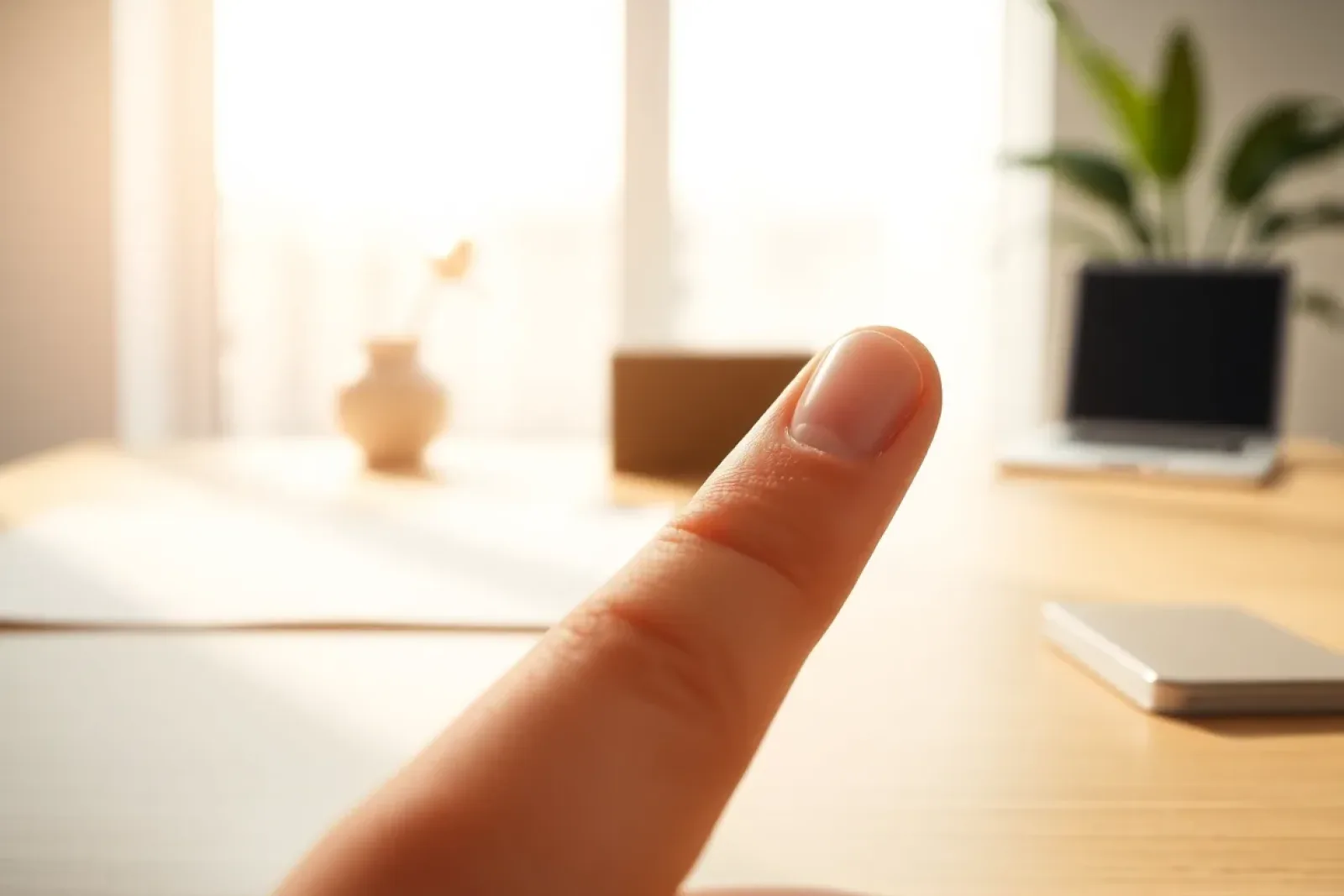
A healthy natural nail under an enhancement looks unremarkable once it is bared: even, matt and firm. Anything else is worth a second look.
| What you see or feel | Where it usually comes from | What helps |
|---|---|---|
| Bendy, see-through plate | too much substance removed | keep short, oil, wait |
| Rough white patches | a set that was peeled off | let it grow out |
| Ring shaped grooves | e-file used with pressure | raise it with your technician |
| Sensitive to cold | thinned nail plate | overlay without added length |
| Redness at the nail fold | irritated skin | have it looked at medically |
One thing does not belong on that list: pain, throbbing, swelling or discharge. That is no longer a question of technique and is a reason to see a doctor.
One thing worth putting in perspective: after any removal the nail plate looks paler and feels softer for a day or two while moisture rebalances. That is normal and not damage. It only counts as lost substance if the impression has not settled after several days, if the nail flexes visibly under light pressure, or if you feel a tug when typing. Knowing that difference saves a lot of needless worry after a perfectly ordinary appointment.
Related articles
4. Do nails need a break?
A break is not compulsory. Where the work is careful there is no argument against wearing enhancements continuously, and plenty of people have done exactly that for years without consequences.
A break earns its place once something has already happened. A thinned nail gets thinner with every new preparation, and the only way to interrupt that loop is to let it grow for a few months. Fingernails replace themselves fully in about four to six months, toenails in twelve to eighteen.
If going completely bare is not for you, there is a middle way: a very thin overlay with no added length. It protects the free edge, stops the sides tearing and needs far less filing at each infill than a worn length does.
One widespread misunderstanding concerns repair treatments. Hardeners, vitamin products and specialist oils cannot fill or mend the nail plate, because there is no metabolism happening there. What they can do is keep the free edge supple and delay splitting — which is not nothing, but it is a different thing from regeneration. Renewal happens only down at the nail matrix, and that process cannot be sped up from outside.
5. How to steer this at your appointment
You do not need to know anything about bits and RPM to have a say. Three sentences are enough: that it is getting warm, when it gets warm. That you do not want added length, if the length you have is fine. And that you would rather sit ten minutes longer at removal than have anything pulled.
Also watch what happens between appointments. If you regularly pick at lifted edges at home, that is the single biggest factor you personally control. A lifted nail should be repaired, not peeled.
And if you are unsure whether the work on you is too rough, photograph your nails right after the next removal. Across two or three cycles the pictures show changes far more clearly than daily life does.
If you are changing salons, the first appointment tells you the most. Watch whether preparation is done with a buffer or with an e-file, whether the nail plate is checked along the way, and whether anyone explains what is happening. Those three observations say more about care than any price list — and they cost you nothing but attention during the first half hour.
Artificial nails are not the problem. Blanket surface filing, pressure on the e-file and peeling at removal are, and all three are questions of technique. Next time, pay attention to how your nail feels immediately after removal: smooth and firm is the goal, and anything else is worth a conversation.
Booking your infill without a phone call?
This link is meant for your nail studio, not for you. If you would rather set your infill or a new set online, pass it on at your next appointment.