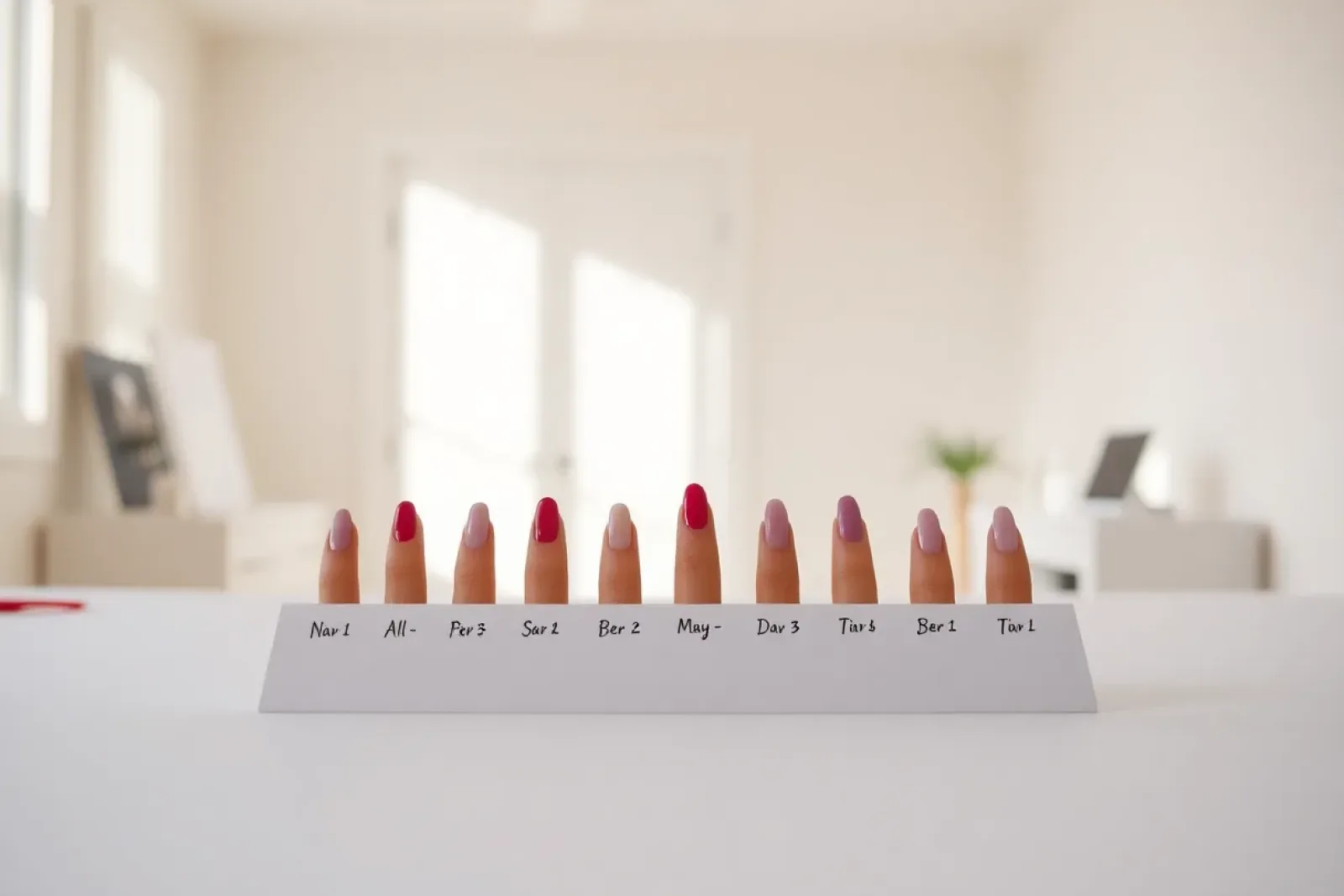
Shape follows your nail bed. Long and narrow beds carry almost anything; short and wide beds are lengthened visually by oval and almond. Round and squoval are the most hard-wearing shapes, stiletto the most fragile. As a rule of thumb, the tip should mirror the curve of your cuticle line.
Most people choose a shape from a photograph — and then the same shape looks different on their own hand. That is rarely the salon's doing. It happens because a shape only works in relation to your nail bed, your finger length and the shape of your fingertip.
There are still reliable rules, and they compress into one sentence: the rounder the tip, the stronger the nail; the more pointed it is, the longer the finger looks and the more careful you have to be.
1. The shapes at a glance
The common shapes differ in two respects: how much material is left along the sides, and how sharply the tip tapers. Together those two decide both strength and effect.
| Shape | Durability | Effect | Minimum free edge |
|---|---|---|---|
| Round | very high | discreet, natural | from 0 mm |
| Oval | high | lengthens the finger | from 2 mm |
| Squoval | very high | clean, practical | from 1 mm |
| Square | medium | wider looking tip | from 3 mm |
| Almond | medium | strongly lengthening | from 5 mm |
| Ballerina | medium to low | elegant, striking | from 7 mm |
| Stiletto | low | very striking | from 10 mm |
Squoval is popular for a reason: it keeps the clean edge of a square shape but rounds off the corners, and those corners are exactly where nails otherwise tear.
Two words get used together but mean different things. Shape describes the outline of the tip; length describes how far the nail extends past your fingertip. They can be chosen independently, and that is where the room to manoeuvre sits: almost every shape also exists short. An almond at three millimetres looks nothing like one at ten, yet it is the same shape — and far more practical.
The tip mirrors the cuticle. Pick up that one line and you almost automatically get a shape that suits the hand.
2. Working out your nail bed shape
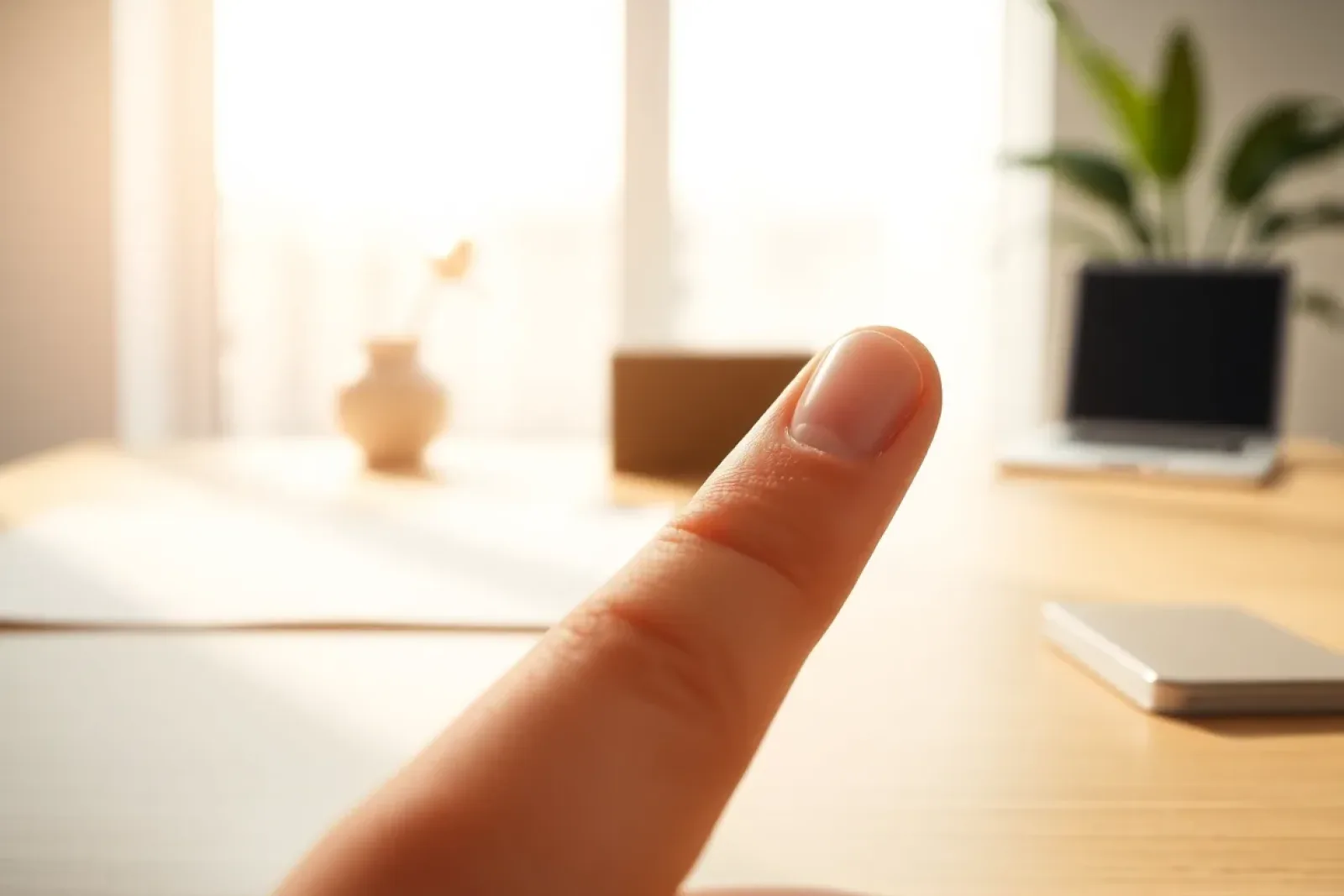
Look at a bare nail from above and follow the line where your cuticle ends. On some hands it is distinctly curved, on others almost straight. That line is your template: a tip that echoes it looks settled, while a contradicting shape always looks applied.
Next, look at proportion. A nail bed that is wider than it is long benefits from shapes that taper towards the centre — oval and almond. A narrow, long bed carries square shapes comfortably because it has width to spare.
Finally the fingertip itself. On broad fingertips a very pointed shape reads as foreign, simply because the contrast between pad and point is so large. A softer curve sits better there without costing you any length.
The sidewalls deserve a second look too. If your nail drops away sharply towards the edges, a square shape has little surface to sit on and the corners end up unsupported. A square tip then reads as bolted on, while oval or squoval simply continue the existing curve. This is not a matter of taste either: where there is little nail bed carrying the load, structure has a vote alongside the eye.
3. What each shape can take
Strength comes down to how much material carries the force. A round or oval tip spreads pressure across a broad area. A stiletto funnels everything into a point, and that point absorbs every knock.
That is why stiletto nails rarely break in the middle — they go at the sides, where the taper begins. Ballerina shapes share the same weak spot in milder form: the straight edge is solid, the angled sides are not.
Square shapes have an extra vulnerability at the corners. A square tip catches on fabric, and every catch acts as a lever. This is precisely why square corners are usually softened by a fraction of a millimetre. It is not a compromise, it is craft.
Where a nail breaks matters as much as whether it breaks. A break beyond the fingertip is annoying but harmless. A break behind it, in the nail bed, hurts and takes weeks. That risk climbs with very long, sharply tapered shapes, because the leverage carries force back into the bed. Anyone who has had one of those breaks tends to pick a shorter length next time, and that is a sound decision.
Related articles
4. Shape, length and everyday life
Length dictates your day more than shape does, but shape moves the threshold. An almond at six millimetres of free edge is unremarkable; the same shape at twelve millimetres means relearning zips, buttons and keyboards.
If you type a lot, squoval at short to medium length is the least dramatic choice: you hit the keys with the pad of your finger rather than the tip. If you have small children around, rounded shapes are kinder because there is no corner to scratch with.
One practical point for the undecided: shapes can be changed at an infill without redoing the whole set. Square to squoval is a matter of minutes; round to stiletto needs length, and length needs time.
Your other hand has a say as well. On most people the nails of the dominant hand are shorter, more worn at the corners and slightly wider. A shape that looks perfect on one hand can sit differently on the other. That is normal and gets balanced out during filing, but it explains why a photograph of one hand never shows you the whole result.
5. What to say at your appointment
Bring a picture, but say what you like about it — the length, the tip or the colour. A picture on its own leaves that open, and it is the single most common source of misunderstandings.
Describe your daily life too: keyboard, workshop, care work, an instrument, climbing. The realistic length follows almost automatically from that, and shape follows length.
If you are trying a shape for the first time, go one step shorter than planned. You can always add length at the next appointment, whereas a length that annoys you will not survive three weeks.
One more thing for the appointment itself: ask to see the shape while it can still be changed. Hold your hand away from you with the fingers extended and look down at it, not from the side — from the side every shape looks straighter than it is. If something is off, the moment before colour goes on is the last one where a correction is quick.
Nail shape is less a matter of taste than it looks: your nail bed and fingertip set the direction, durability drops with every degree of taper, and length decides how the day goes. Have a look at the curve of your own cuticle before your next appointment — it is the best hint you are going to get.
Booking your infill without a phone call?
This link is meant for your nail studio, not for you. If you would rather set your infill or a new set online, pass it on at your next appointment.