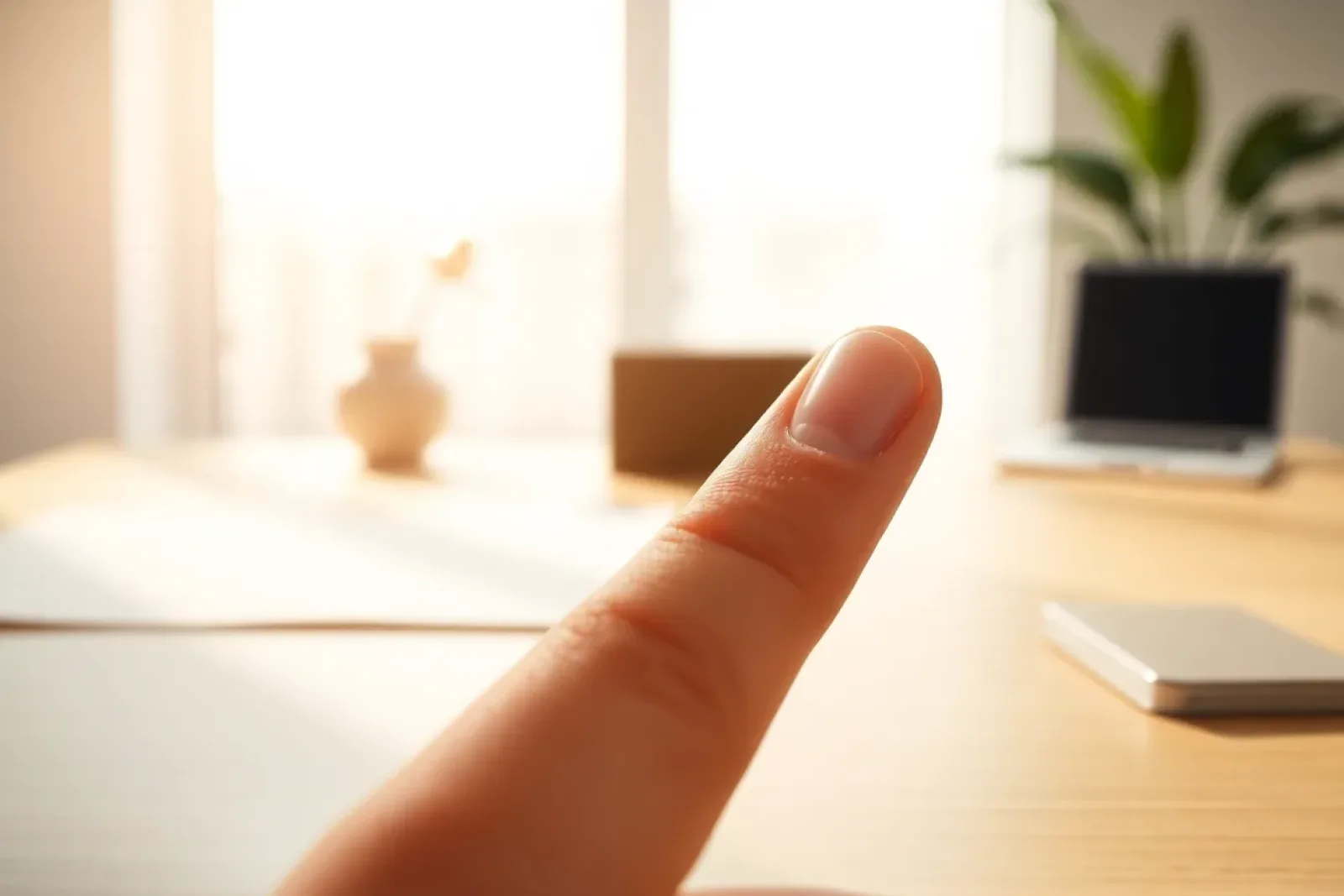
The nail plate does not repair itself, it grows out. A complete replacement takes four to six months on the hand and twelve to eighteen on the foot. Visible improvement starts around week six, when the first centimetre of newly formed nail begins pushing the old, thinned surface forward.
Standing there without enhancements after years of wearing them is often a shock. The nails are bendy, translucent, they split at the sides and they react to cold. It feels permanent, but it is a transition with a predictable timetable.
Knowing that timetable helps, because it fixes expectations. If you know that almost nothing can have happened after four weeks, you get through four weeks. If you check daily for change, you usually give up in week three — right before anything becomes visible at all.
1. What is actually going on with a thin nail
New nail is formed only in the matrix, a few millimetres under the skin behind the visible half-moon. Everything you can see is already finished, dead keratin being pushed forward. That is why no cream, oil or treatment can fill a thinned area back in — there is no metabolism at that point any more.
The thinning almost always came from layers being filed or torn away. What is left is less material between you and the sensitive nail bed underneath. Hence the classic complaints: the tug when typing, the sensitivity to cold, and the feeling that the nail moves with every bit of pressure.
The good news is written into the same anatomy. Because the matrix carries on undisturbed, recovery is a question of when rather than whether. The only thing you can influence is how well the new nail gets through the period while it is still short.
The sensitivity has the same explanation. With less substance between plate and bed, pressure, cold and heat arrive more directly. It feels alarming but does not indicate damage to the bed itself, and it disappears as soon as there is more material above it again.
Nails do not heal, they grow. Which makes patience less a virtue here than the only method that works.
2. The timetable: what happens when
Fingernails grow around three millimetres a month, toenails about one. That produces a sequence you can follow on your own hand if you keep an eye on the border between old and new nail.
| Period | What you see | What helps |
|---|---|---|
| Weeks 1 to 4 | bendy, sensitive, splitting at the sides | keep short, oil daily |
| Weeks 5 to 8 | a firmer band appears near the cuticle | glass file, gloves for housework |
| Months 3 to 4 | well over half is new nail | let length come back slowly |
| Months 5 to 6 | fully replaced | ordinary care is enough |
The border between old and new is often visible as a fine line or a slight step. It is the most honest progress indicator you have, and considerably more reliable than the feeling that nothing is happening.
3. What genuinely helps during this time
Keeping them short is the most effective single measure. Every millimetre of free edge acts as a lever, and a thin nail has less to resist it with. Cutting back to just past the fingertip for the first eight weeks means losing far fewer nails to splits.
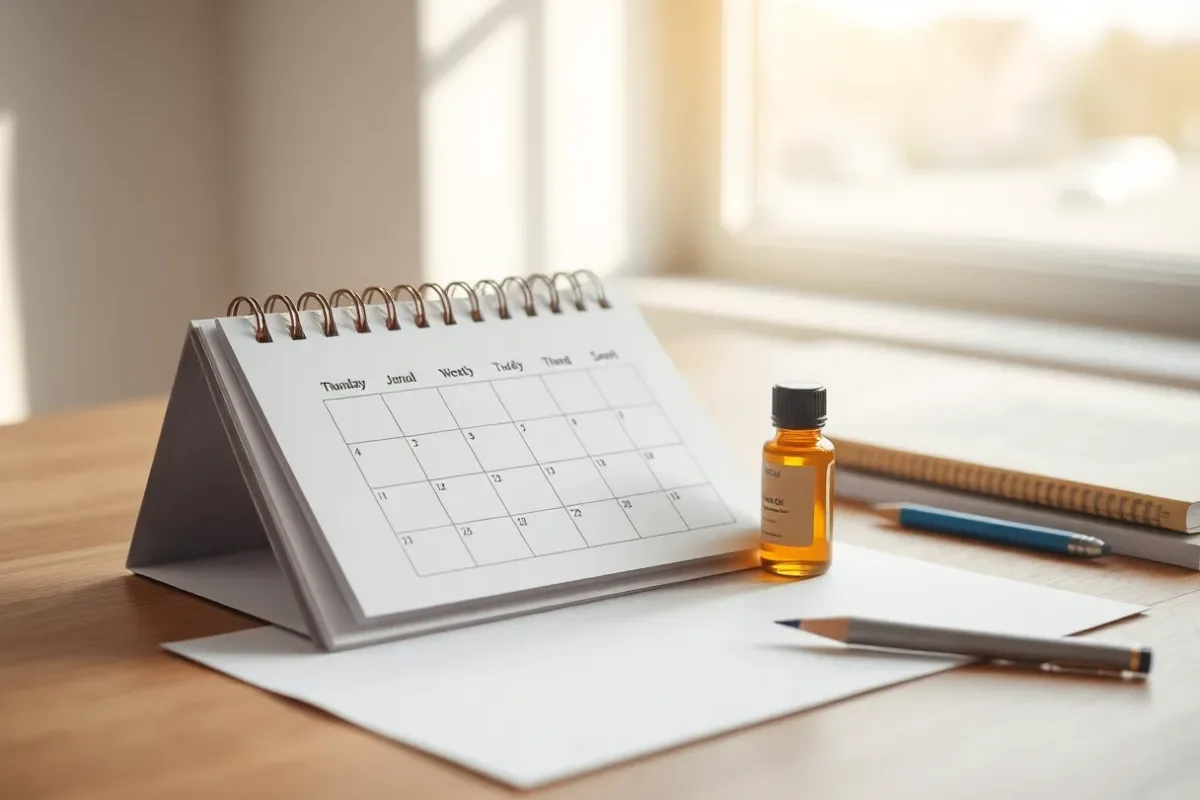
Oil is the second point, applied in the right place: onto the nail fold and the underside of the free edge, once or twice a day. It does not make the plate thicker, but it does make it more supple, and supple keratin splits later than brittle keratin. Hand cream over the top makes the effect last.
Third: file rather than clip, in one direction with a fine file. Clippers compress the layers and create precisely the small cracks along the edge that later become splits. And fourth, gloves for dish soap, cleaning products and long contact with water — water softens the plate, and softened keratin deforms.
The edge deserves special attention. A thin nail almost never splits in the middle; it goes at the sides, where it leaves the nail bed. A brief pass with a file every day keeps that edge smooth and snag-free, which takes two seconds per nail and prevents most of the trouble.
Related articles
4. What does not help
Hardeners work in the short term by stiffening the surface. Used over longer periods, many nails end up more brittle rather than stronger, because rigid keratin snaps where flexible keratin bends. If you use one, treat it as a time-limited aid rather than a permanent fixture.
Repair courses, rebuilding serums and specialist treatments cannot return lost substance either. What they do is care for the surface and the surrounding skin, which is worthwhile, but it does not shorten the four to six months. If you buy a product, know what you are buying it for.
Supplements and vitamin products sit outside the scope of this article on purpose: whether your body needs anything cannot be read off your nails, and that question belongs in a medical consultation. If the colour, shape or structure of your nails changes markedly and persistently, that is the right route — not the drugstore shelf.
Frequent polish changes are also worth avoiding in this phase. The polish is not the problem; the remover is, because each round pulls moisture out of an already thin plate. If you want colour, leave it on longer and take it off less often.
5. The middle way when going bare is not an option
A full break is not the only choice. A thin overlay with no added length puts a protective layer over your own nail at your own length and shape. It stops the sides splitting, takes away the cold sensitivity, and needs far less filing at each infill than a worn length does.
Preparation is the critical part. An already thin nail must not be surface-filed again. Say explicitly that your nail is thin and that you want the gentlest possible preparation. A good technician will then use a buffer rather than an e-file and apply less product.
Plan the ending in advance too. An overlay eventually comes off, and that removal belongs in the salon. Peeling the middle way off at home leaves you worse off than before the break started, and the whole exercise was then for nothing.
A realistic timetable also helps you decide. If your event is three weeks away, an overlay makes sense. If you want a genuine reset, four to six months bare is the more honest choice, because every preparation costs substance again. Both are defensible — the decision should just be deliberate rather than a week-three surrender.
Recovery here means growing out, and the timetable is four to six months on the hand. What you control is length, filing technique, oil and water contact — nothing more, but that is enough. Take a close look at the line near your cuticle in four weeks: it is the proof that the process is running.
Booking your infill without a phone call?
This link is meant for your nail studio, not for you. If you would rather set your infill or a new set online, pass it on at your next appointment.