Table of contents
Brow lamination is a perm for your eyebrows. A softening cream makes the hairs pliable, they are brushed into position and then set with a second product. The brow looks fuller and far tidier, with no colour and no needle involved. It lasts four to six weeks and takes 45 to 60 minutes.
What most people are actually after is direction. Brow hairs do not grow uniformly: some point down, some curl, and on strong brows that reads as messy. Lamination does not change how many hairs you have, only where each one sits — and because the repositioned hairs cover the gaps between them, the brow looks fuller without a single hair being added.
That is also the limit of the treatment. Where nothing grows, nothing can be laid down. Sparse or very fine brows come out neat rather than transformed, and knowing that beforehand saves the disappointment afterwards.
1. What actually happens during the appointment
The process runs in three chemical steps and is a close relative of a perm, just on a much smaller scale and with far shorter processing times.
Step one, softening. A thioglycolate cream opens the bonds that hold the hair in its shape. Depending on how coarse your hair is it sits for roughly eight to twelve minutes, and during that window the hairs are as pliable as damp paper.
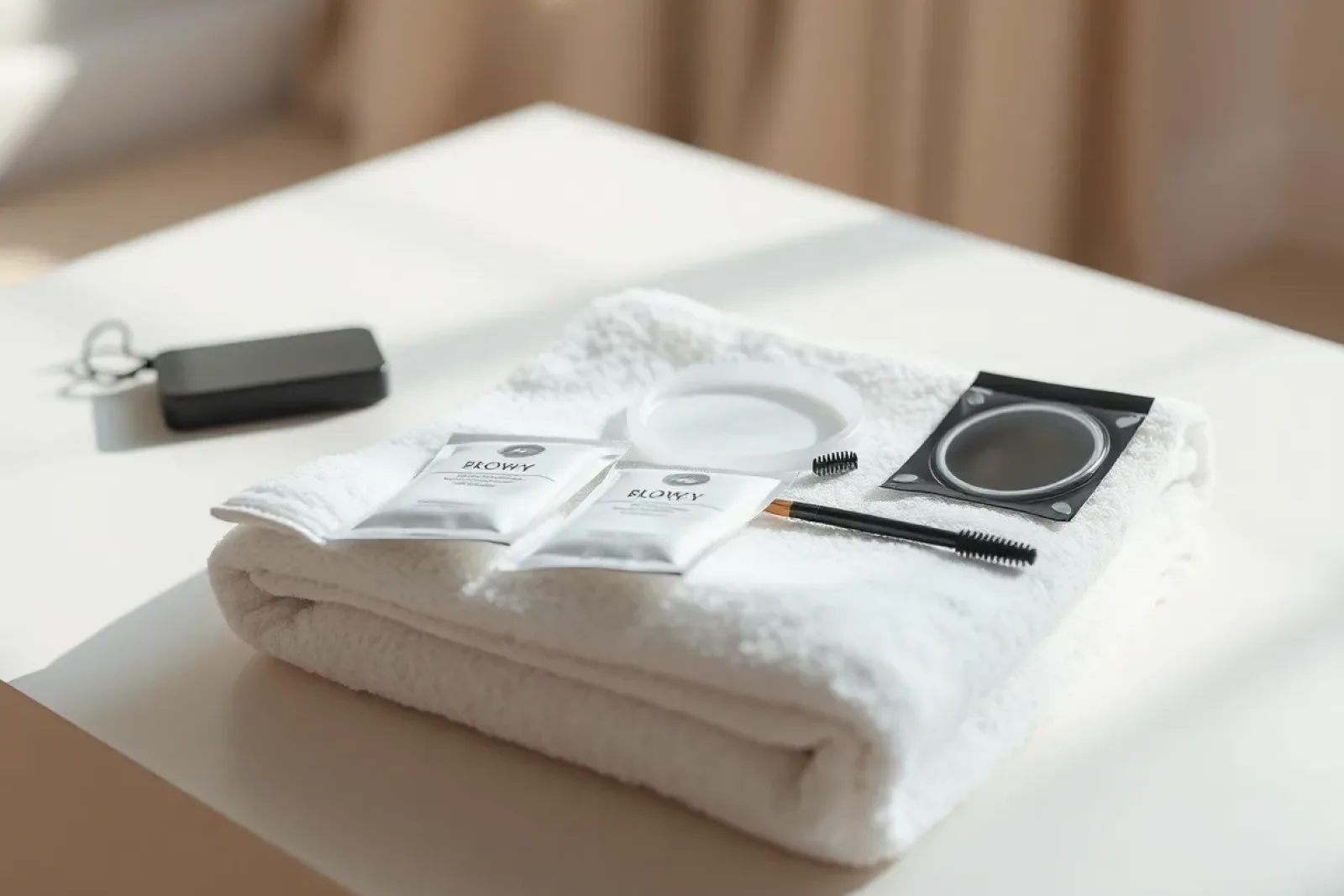
Step two, setting the direction. Your therapist combs every hair with a spoolie into the position it should hold, usually straight up and angled slightly towards the temple at the outer third. The hairs are held in place on the skin or on a silicone pad, most often with an adhesive that dissolves in water.
Step three, fixing. A second product closes the bonds again in the new position. A conditioning layer follows, because both chemical steps pull moisture out of the hair.
Tinting is frequently done straight afterwards. That makes sense, since softened hair takes colour more readily, but it adds around 15 minutes. Any tweezing comes last of all — before the hairs are laid down, nobody knows which ones will end up outside the shape.
Lamination changes the direction of the hairs, not their number. Where nothing grows, nothing can be laid down.
2. Who actually benefits
The difference is most dramatic on strong, unruly brows that grow in several directions at once. Lamination organises something that gel only just manages to control each morning, and it holds for weeks with no daily effort.
It also works well where hairs grow downwards and weigh down the eye, and on asymmetric brows: if one arch reads higher than the other, direction can partly even that out.
It does far less for fine, pale or sparse brows. Standing a single thin hair upright does not make it more visible, and a gap stays a gap. Tinting, or permanent make-up if you want something lasting, is the more effective route there.
Long brow hairs are a case of their own, and they become more common with age. They lift well but then tend to look stringy, because individual hairs shoot far past the outline. Trimming becomes part of the appointment, and it should be agreed in advance: trimmed brow hairs grow back slowly.
One more thing a good salon will raise unprompted. If you already brush your brows up with soap or gel every morning and like the result, you do not need the chemical version. The difference is how long it holds, not how it looks.
3. How long it lasts, what it costs, how it compares
Longevity is a function of growth: a laminated hair stays laminated until it grows out or sheds. Because brow hairs live considerably shorter lives than scalp hair, the regrowth shows after four to six weeks, and by week eight little of the effect is left.
| Treatment | What it does | Lasts | Takes | Typical price |
|---|---|---|---|---|
| Brow lamination | lifts and directs hair | 4-6 weeks | 45-60 min | 75-120 dollars |
| Lamination with tint | direction and colour | 4-6 weeks, tint 2-4 | 60-75 min | 95-150 dollars |
| Brow tint alone | darkens the hair | 2-4 weeks | 20-30 min | 25-45 dollars |
| Henna brows | stains hair and skin | 2-3 weeks on skin | 30-45 min | 45-75 dollars |
| Permanent make-up | pigment in the skin | 1-3 years | 120-180 min | 500-900 dollars |
These are US salon ranges for 2026 and sit at the top end in large cities. A conspicuously cheap offer is worth a second look: the product costs very little and the time to work carefully costs a lot, so it is usually the second one being trimmed.
Repeat the treatment after six weeks at the earliest, eight is kinder. More often than that stresses the hair without improving the result.
Related articles
4. The first 48 hours, and the aftercare that follows
The set is not final when you leave. For the first 24 hours that means no water, no rubbing, no sleeping face down, no make-up on the brow, no sauna and no sweaty workout. Water during this window is the single most common reason hairs drop back down.
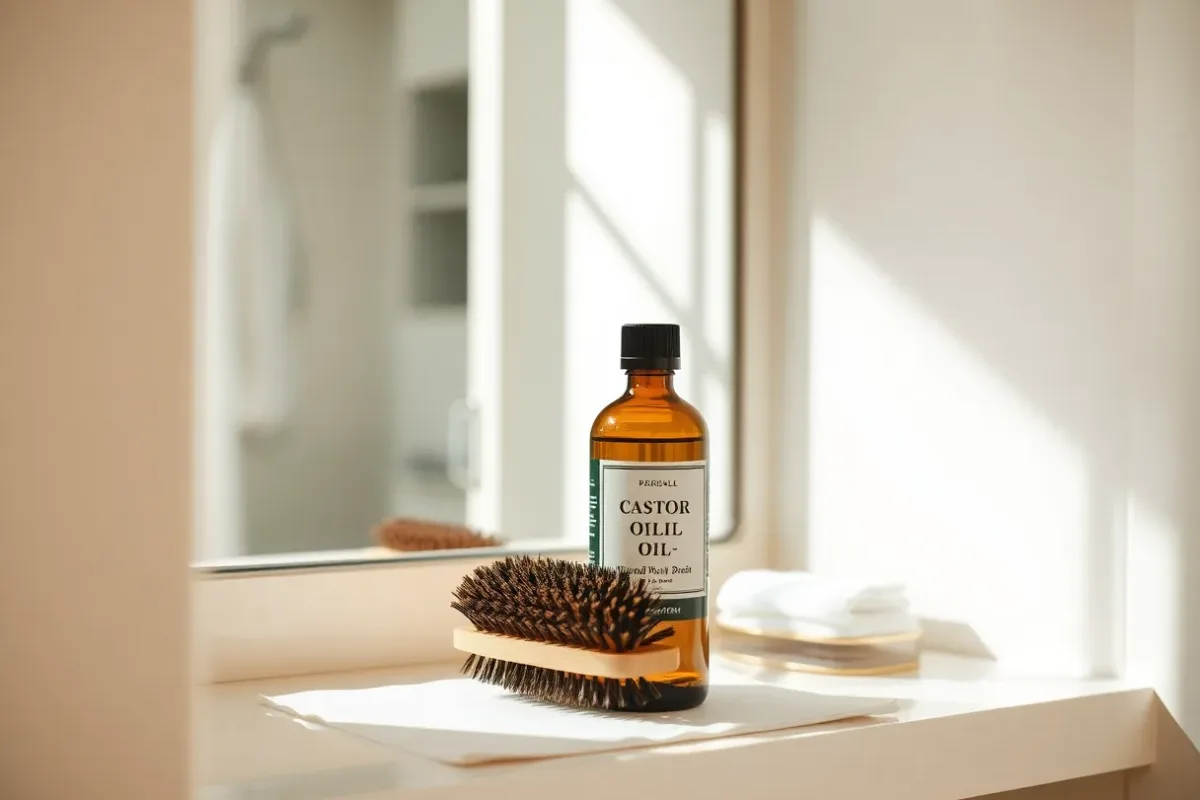
From day two everything is allowed again, and the real aftercare begins. It consists of one habit: a drop of oil on the brows in the evening, brushed through with a clean spoolie. Castor, jojoba and argan oil are all commonly used. The chemical steps dry the hair out, and dry brow hair snaps — which is the cause behind most reports of ruined brows after lamination.
In the morning, brushing is enough. Gel is not required, and if you do use one, keep it light: heavy products pull the lifted hairs back down.
After two or three weeks many people notice the brows sitting flatter. That is normal and not a fault. If you miss the steep lift of the first days, soap or a clear gel will bridge the gap rather than pulling your next appointment forward.
5. Risks, the patch test and when the appointment is cancelled
The products are chemically active and they are applied close to the eye. Two risks are genuine: an allergic reaction, and over-processing when the cream is left on too long. Over-processed hairs feel like straw, kink in random directions and break. They do grow back, but that takes weeks.
A patch test 24 to 48 hours before your first appointment is standard, and doubly so if you are having a tint at the same time. It goes behind the ear or in the crook of the elbow. A salon that skips it for a new client is taking a risk it does not need to take.
Appointments are usually postponed or declined for:
- broken skin, eczema, psoriasis or sunburn around the brow
- a known allergy to thioglycolate, brow tint or adhesive
- isotretinoin treatment, or a short gap since finishing it
- a recent facial peel, microneedling or laser treatment
- any eye infection, including in the other eye
Many salons decline during pregnancy and while breastfeeding as a matter of policy. There is no solid safety data for these products either way, so the caution is precautionary rather than evidence of harm. What matters is that the decision is not the salon's alone — it belongs with your own doctor.
Where lamination sits legally differs by country, and so does who may perform it. In Germany, for instance, injectables in the same part of the face are restricted to physicians while lamination is not. Check the rules for the country you are booking in rather than assuming they match.
If your brows are dense enough and it is the direction that bothers you, lamination gives you the best return for the effort involved. Take a photo of your brows on an ordinary morning rather than a freshly styled one to your first appointment: that is what shows your therapist what actually needs organising.
Booking your next treatment without a phone call?
This link is meant for your studio, not for you. If you would rather book online and keep your treatment history in one place, pass it on at your next appointment.