Classic sets place one extension on one natural lash and define what is there. Volume fans several ultra-fine extensions onto a single lash for density. Hybrid mixes both. Which technique works depends on your lashes, not the photo you brought: they carry limited weight. A full set takes 90 to 180 minutes, infills every two to three weeks.
The names on a price list rarely help. 2D, 5D, wet look, wispy, Kim K — it reads like a catalogue, but all of it describes only how many extensions sit in one fan and how those fans are arranged. The real decision is much plainer: how much weight can your own lash carry, and how much upkeep are you willing to commit to?
That is why any decent appointment starts with a proper look at what you already have. A technician who sells you a technique over the phone, without having seen your lashes, skips exactly the step that later decides whether the set holds or whether you are missing your own lashes three weeks on.
1. The three core techniques and what each one looks like
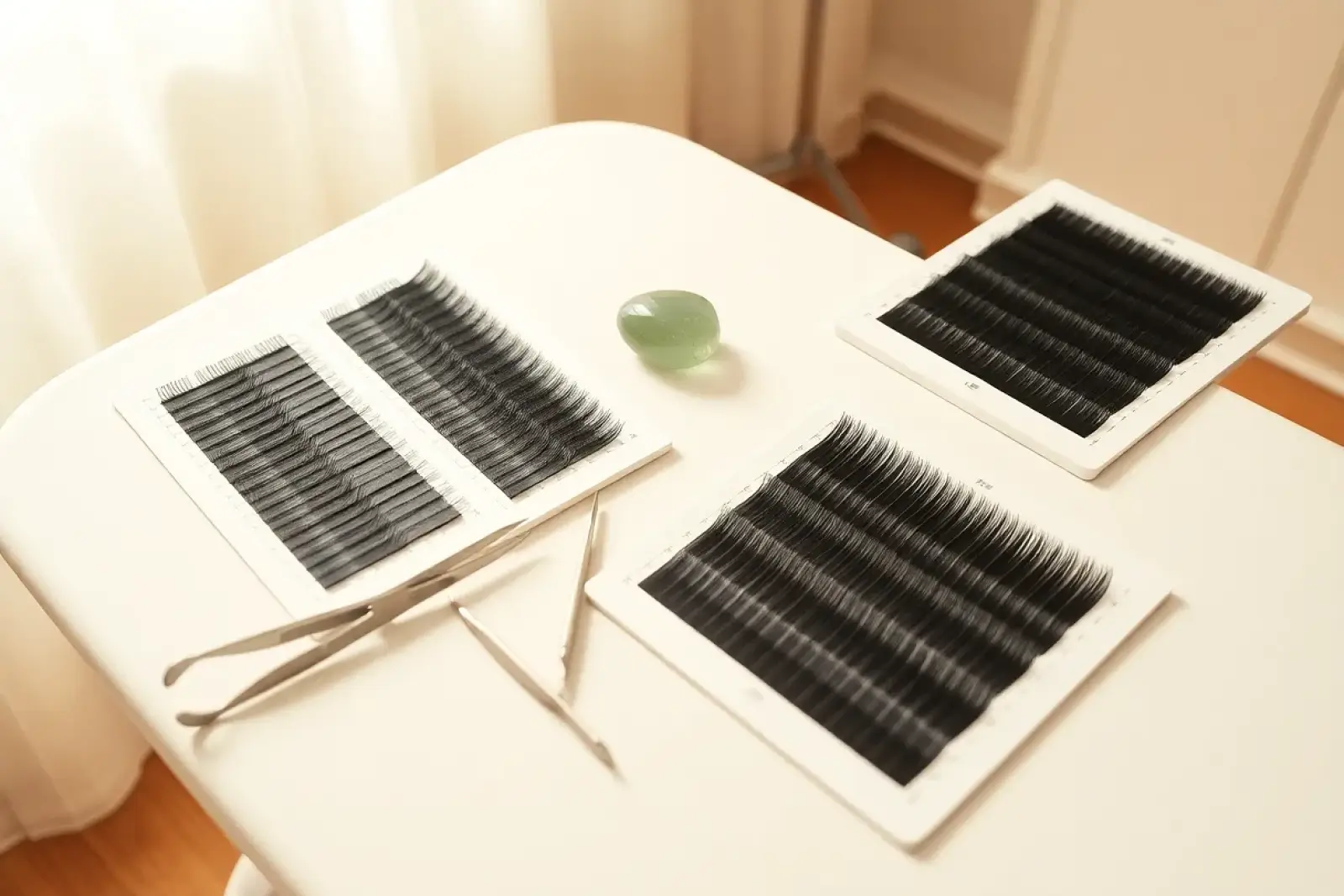
Classic (1:1) is the simplest form: one extension on every natural lash that can carry it. The result reads like a very well-coated lash — longer, darker, better defined, but no denser. If you already have plenty of lashes and only want them emphasised, this is all you need. If you have few, the gaps will still be gaps.
Volume works with fans. Two to six extremely fine extensions are shaped by hand into a small fan and placed on a single natural lash. Because those individual hairs are far finer than a classic extension, a whole fan often weighs no more than one classic lash. That is the trick: more surface, same load. The number before the D tells you how many hairs make up the fan.
Hybrid mixes both across the same eye, usually somewhere between 30:70 and 50:50. The result is slightly irregular and textured, which many people find the most natural of the three, because real lashes do not grow in an even row either.
Style names sit one level above all that. A wet look comes from closed, pointed fans and reads as freshly damp. Wispy places longer spikes between shorter sections. Both are arrangements rather than techniques of their own, and both can be built on volume or on hybrid.
The technique follows the lashes you have, not the picture on your phone.
2. What your own lashes can actually carry
Three things set the limit: the thickness, the length and the number of your natural lashes. A strong, thick lash carries more than a fine one. A six-millimetre natural lash cannot carry a fourteen-millimetre extension however light it is — the leverage becomes too great, the lash tips forward and pulls at the root.
Most technicians work to a rule of thumb: the extension may be roughly two to three millimetres longer than the natural lash, a little more in exceptional cases. Anything beyond that may look spectacular in a photograph, but it loads the follicle permanently. And that load is the point at which a pretty lash line turns into a problem.
Then there is the natural growth cycle. Every lash grows, rests and sheds; on average you lose a few lashes a day with no extensions involved at all. When a natural lash sheds, the extension goes with it. That is not the salon failing, it is biology — and it is why visible gaps appear after two to three weeks.
If your lashes are very fine or very short, volume is not automatically ruled out. Quite the opposite: because the individual hairs in a fan are so thin, a light volume set can be gentler on fine lashes than one thick classic extension. What matters is the total load per natural lash, not the name of the technique.

3. The techniques side by side
The table below sums up what to expect from each. Prices are typical US salon ranges for 2026 and vary widely by region — big-city studios sit well above the top end. Ask for the price of your specific set rather than the headline starting price.
| Technique | Effect | Full set time | Full set price | Infill |
|---|---|---|---|---|
| Classic 1:1 | defined, like mascara | 90–120 min | approx. 120–200 dollars | approx. 60–95 dollars |
| Hybrid | textured, natural | 120–150 min | approx. 140–230 dollars | approx. 70–110 dollars |
| Volume 2D–4D | dense, soft | 120–180 min | approx. 160–275 dollars | approx. 80–130 dollars |
| Mega volume 5D+ | very dense, bold | 150–210 min | approx. 200–350 dollars | approx. 95–150 dollars |
One thing the table does not show and it still matters: time. A volume set takes considerably longer because every fan is shaped by hand. If lying still for close to three hours is not for you, say so beforehand — hybrid is often the smarter answer.
Check as well whether the infill price is tied to a window. Many salons tier it: the infill rate applies up to day 21, after which a full set is charged. That is not a trick, it is realistic — once two thirds are missing, it is no longer an infill.
Related articles
4. How long a set lasts and what happens between appointments
A well-placed set looks very good for two to three weeks and increasingly patchy after that. The gap between infills is therefore not a mark of quality but a function of your lash cycle. People with a fast cycle need topping up sooner, without anyone having done anything wrong.
At an infill, grown-out and twisted extensions are removed and the freed natural lashes are re-lashed. Allow 45 to 75 minutes. Come regularly and the set stays full for months. Miss two appointments and the work involved is such that a fresh full set is quicker and often cheaper.
Between appointments, what you avoid matters more than what you do: no rubbing, no picking, and no oil-based cleanser anywhere near the eye. Oil softens the adhesive and is the single most common reason for early shedding. Water is not the enemy — after the first few hours you may shower, swim and sweat.
Waterproof mascara and lash curlers are out. A curler crimps the extension and the natural lash underneath it, and waterproof mascara can only be removed with friction. If you feel you cannot manage without mascara, that is a signal the set was chosen too conservatively — the fix belongs at your next appointment, not in your make-up bag.
5. Tolerance, contraindications and the patch test
Lash adhesive is cyanoacrylate based. It cures in humidity and is never applied to the skin: it goes onto the natural lash, roughly half a millimetre to a millimetre clear of the lash line. Even so, the vapour can irritate the eyes during the appointment. Stinging or pulling that continues after you leave should be raised with the salon rather than tolerated.
If you are known to react to cyanoacrylate or to adhesives generally, a set is not an option. A patch test a few days before a first appointment is the usual way to establish that in advance, and reputable salons offer one, often free of charge. A test does not rule out a later reaction entirely, but it catches the obvious cases.
Appointments are normally postponed in these situations:
- active conjunctivitis, a stye or a chalazion
- an inflamed or broken lash line, blepharitis
- recent eye surgery — clear the timing with the treating clinic
- freshly tinted or lifted lashes (allow at least 48 hours)
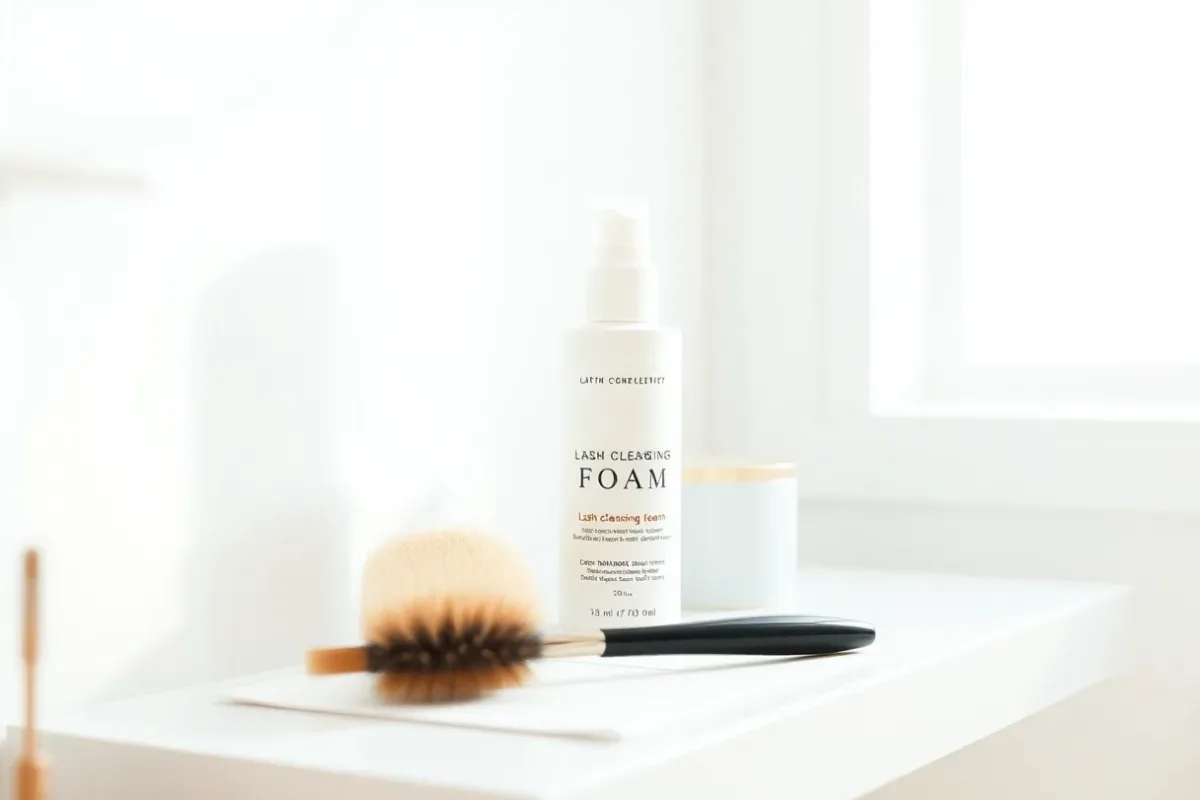
Dry eyes, contact lenses or a tendency towards lid margin inflammation do not rule a set out, but they make aftercare more important: a daily oil-free foam cleanse keeps the lash line clear. If you are unsure whether your eyes will tolerate extensions, that question belongs with an optometrist or your GP rather than the salon — a lash technician cannot and should not diagnose.
Classic defines, volume adds density, hybrid does a measured amount of both — and your own lashes decide how far any of it can go. Take a picture of the look you like to your first appointment and ask what is realistic on your lash line. That one question replaces half the price list.
Booking your next treatment without a phone call?
This link is meant for your studio, not for you. If you would rather book online and keep your treatment history in one place, pass it on at your next appointment.