For congested skin a deep cleanse does the most work, for tired or dry skin a hydrating facial, and for texture or pigmentation a peel or microneedling. Without a skin analysis any recommendation is guesswork. Expect 60 to 90 minutes and roughly 85 to 150 dollars for a standard facial in the US.
Treatment names on a salon menu are marketing. Aqua glow, diamond ritual, detox facial — behind almost all of them sit the same four or five building blocks in a different order. Once you can see that, a menu reads like an ingredients list and you can tell immediately whether a facial addresses your concern or simply sounds expensive.
This guide sorts facials by what they actually do rather than what they are called. By the end you will know which question to ask at the salon so you get the right treatment instead of the most-booked one.
1. The building blocks every facial is made of
Almost every facial is assembled from the same modules. The order is largely fixed, the selection varies.
- Cleanse and analysis — make-up off, skin examined, often under a magnifying lamp or Wood lamp.
- Exfoliation — enzyme, acid, ultrasonic spatula or microdermabrasion. Removes dead surface cells.
- Softening — steam or a compress so congestion can be released.
- Extraction — manual clearing of blackheads and blocked pores.
- Active delivery — serum, sometimes assisted by ultrasound, microcurrent or microneedling.
- Mask and finish — calming, hydrating or clarifying, then moisturiser and SPF.
A standard facial contains all of the modules in a mild form. A targeted facial drops some and goes deeper on one: a deep cleanse loads the softening and extraction stages, a peel loads exfoliation, an anti-ageing facial loads active delivery.
That also explains why a facial promising everything is rarely the best buy. Sixty minutes can go deep once or skim six times.
A good facial answers one concern. A poor one contains everything and therefore changes nothing in particular.
2. Matching the treatment to the concern
Work out your concern before you book. The list below covers the common cases.
| Concern | Treatment that fits | Duration | Price range |
|---|---|---|---|
| Blackheads, congestion | deep cleanse, enzyme if needed | 60–90 min | approx. 95–160 dollars |
| Dryness, dull tone | hydrating facial | 60 min | approx. 85–140 dollars |
| Uneven texture, pigment | acid or enzyme peel | 30–60 min | approx. 90–175 dollars |
| Fine lines, firmness | microneedling, microcurrent | 60–90 min | approx. 175–400 dollars |
| Redness, sensitivity | calming facial, no exfoliation | 60 min | approx. 95–160 dollars |
| Before an event | hydration and glow, no peel | 45–60 min | approx. 85–150 dollars |
Two of these are commonly got wrong. First: with active, inflamed spots a vigorous extraction is not automatically right — inflamed lesions are calmed, not squeezed. Second: a peel does not belong in the week before an important date. Peels need time to settle, and that is the one week you do not have any.
3. Device treatments and what they add
Beyond hands-on work, most salons run devices. The common ones are quickly explained. Ultrasound loosens surface build-up with a spatula and then drives actives in. Microcurrent uses a very low current across the facial muscles and is used for a short-term lifted appearance. Microdermabrasion removes the surface layer mechanically, with crystals or a diamond tip. Hydradermabrasion, sold under various brand names, combines exfoliation and suction with a fluid.
The honest framing: these treatments improve texture, clarity and hydration. They do not replace medical treatment and they do not change anatomy. Where a salon promises outcomes that sound surgical, scepticism is warranted.
Who is allowed to operate which device is set nationally, and the first thing to establish is not how strict your country is but what it regulates — because that decides whether asking about a qualification tells you anything at all. Where the person is licensed, the qualification is the answer: providers in Scotland, Wales and Northern Ireland register with their national healthcare regulator, and Germany requires a certificate of competence and reserves some applications for doctors. Where the device is licensed instead — Poland is the clearest example — no cosmetic qualification exists at all, and what decides is how the machine is certified and what its manufacturer's instructions say about who may run it. England is different again, with no single national licence and requirements that depend on local rules. Work out which of these applies where you live, then ask the question that fits it.
Whatever the country, two questions travel well: what training does the operator have on this specific device, and what happens if my skin reacts badly.
Related articles
4. What to expect in the room, and what not to
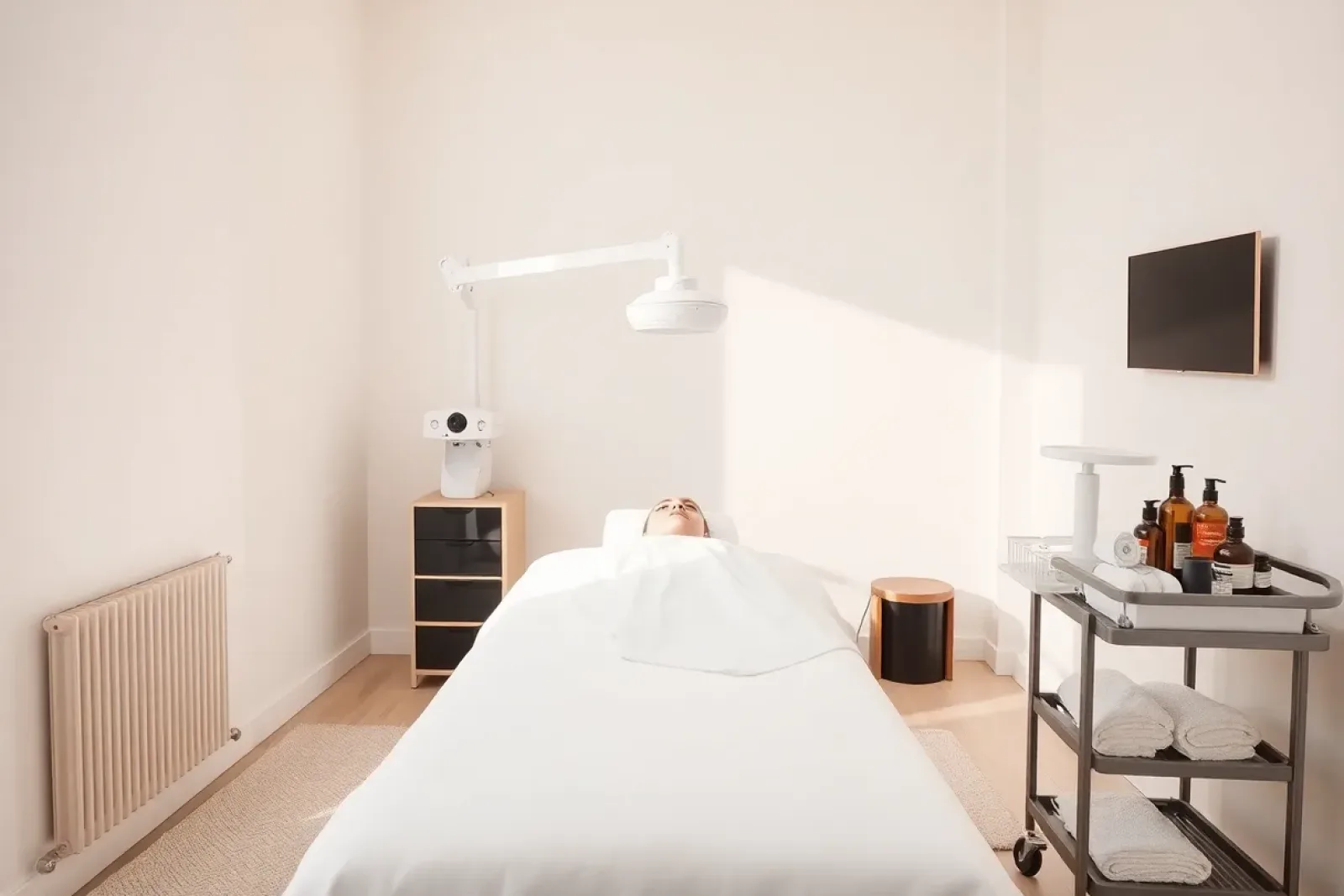
A good facial starts with questions: what do you use at home, are you on any medication that increases sun sensitivity, have you had recent sun exposure, has anything ever reacted. A therapist who simply starts is working without the information that decides which actives are safe to use.
Realistic after a single treatment: a smoother surface, noticeably better hydration, a fresher tone for a few days. After extractions the skin can stay pink for one to three days and individual spots may surface. After an acid peel light flaking is normal.
Not realistic: permanently smaller pores, the disappearance of scars or deep lines, a cure for acne. Facials can improve a skin and keep it stable; they do not change your predisposition. A salon claiming otherwise is selling an expectation it cannot meet.
Practicalities: you do not need to arrive without make-up, it will be removed anyway. Contact lenses are usually fine. Speak up if you are cold, or if something stings rather than tingles — a peel should tingle, not hurt. And plan the rest of the day without sun, exercise or a sauna.
One thing surprises most first-timers: after thorough extractions the skin can look busier for a few days, not calmer. Congestion that was already sitting below the surface comes up. That is annoying when the appointment falls two days before an event, and it is the second reason extractions do not belong in the final week before a date that matters.
Say in advance what you have been using. Retinoids, acids, benzoyl peroxide and some acne medication make skin markedly more reactive to exfoliation and heat, and most therapists ask you to pause retinoids for roughly five to seven days before a peel. Withholding that risks a reaction neither the salon nor the product caused.

5. When a course makes sense and when one facial is enough
For relaxation, hydration and a short-lived glow, one facial does the job. Changing a skin needs repetition, because skin works in cycles: surface renewal takes roughly four to six weeks depending on age, and visible remodelling deeper down takes months.
Typical courses run to four to six sessions two to four weeks apart, followed by maintenance every four to eight weeks. That holds for peels, microneedling and most device treatments alike. A salon proposing a course is not necessarily upselling — with these treatments, repetition is the mechanism.
You can recognise a sound recommendation: it names a number, an interval and an interim goal, and it says what has to happen at home. No course carries far without home care; the ten minutes a day count for more than the sixty minutes every four weeks.
You can recognise a poor one too: a block of ten prepaid sessions sold before the first treatment, or a package you are asked to sign for under time pressure on the bed. A first appointment should always be bookable on its own.
Decide on one concern before you book — congestion, dryness, texture, redness — and find the treatment built around it. If you are unsure, book a standard facial with a proper skin analysis: it costs the least and gives you the information everything else can be planned from.
Booking your next treatment without a phone call?
This link is meant for your studio, not for you. If you would rather book online and keep your treatment history in one place, pass it on at your next appointment.