Table of contents
Regular polish air dries and lasts two to five days. Gel polish, often called Shellac after the brand, cures under a lamp and lasts two to three weeks but adds no length. A gel enhancement builds the nail up, can extend it, and is infilled after two to three weeks rather than replaced.
The three terms get used interchangeably even though they describe three completely different things. Shellac is not even a product category — it is a brand name belonging to CND. Because it arrived early and stuck, plenty of people say Shellac and mean any gel polish at all.
The real dividing line is not shine. It is whether the product is only a coat of colour or whether it adds substance to the nail. Everything else — wear time, price, and how it comes off again — follows from that.
1. Three systems, three jobs
Regular nail polish is colour that dries by evaporation. It sits paper thin, changes nothing about the nail and comes off in two minutes. That is precisely its strength: you can change your mind as often as you like.
Gel polish is colour that cures chemically instead of drying. It is about as thin as polish but far more durable, because once cured it forms a closed, solid film. It cannot add length, and it makes a soft nail only marginally stronger.
A gel enhancement is construction. Product is placed in layers so that a load-bearing shape emerges, with or without extension past the fingertip. It has noticeable thickness, lasts for weeks and grows out with the nail.
One term that keeps slipping into price lists is the overlay. It means builder gel applied at your own length with no extension. Technically that is an enhancement; visually it looks like slightly thick polish. Because salons name this step differently, it is worth asking at booking whether length is being added or not — price, duration and the eventual removal all hang on that one detail.
Polish colours, gel polish seals, an enhancement builds. Separate those three and every price list suddenly makes sense.
2. What the lamp does, and what it does not
Regular polish needs no lamp. It feels touch dry within minutes but is only fully hardened after one or two hours, which is exactly why you end up with bag prints and car seat marks shortly after painting.
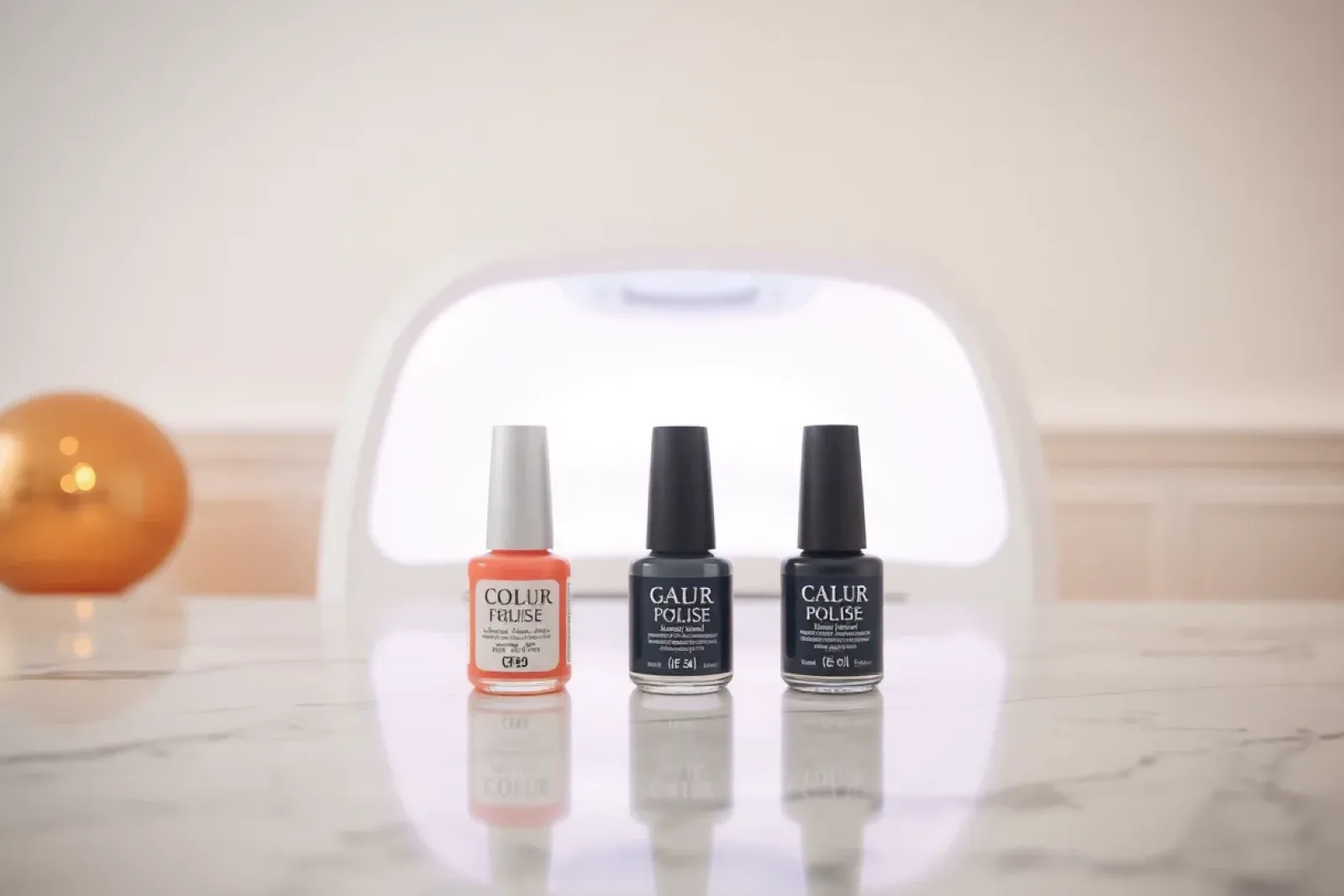
Gel polish and gel cure under UV or LED light in anything from a few seconds to two minutes per layer. The result is immediately robust: you can dig around in your handbag on the way out without a second thought. For many people that instant durability is the actual reason they switch.
One detail that often surprises: gel polish is chemically a gel too. The difference from an enhancement is quantity and purpose, not substance. That is why both feel the same under the lamp, brief warm flash included — a sensation that gets stronger with thicker layers.
That warm flash under the lamp is neither a fault nor a cause for concern, but you do not have to sit through it. If it becomes uncomfortable, take your hand out and put it back after two or three seconds. Curing then runs a little slower but completes perfectly well. The sensation is more common on thin natural nails and with thicker layers, so mention it — a thinner application or a lamp with a gentle start setting usually removes it entirely.
3. Wear time, price and appointment length
The fairest way to compare the three is by time and money together. What stands out is that the cost per week of wear sits far closer together than the headline prices suggest.
| System | Wear time | Appointment | Price range | Adds length |
|---|---|---|---|---|
| Regular polish | 2 to 5 days | 20 to 40 minutes | 25 to 45 dollars | no |
| Gel polish | 2 to 3 weeks | 45 to 75 minutes | 45 to 70 dollars | no |
| Gel enhancement | 2 to 3 weeks until infill | 90 to 150 minutes | 60 to 100 dollars | yes |
Book gel polish every two weeks and across a year you land close to a regularly infilled enhancement. At that point the decision is less about money and more about how much support your nails actually need.
Do not forget the effort on your side. Regular polish needs touching up every few days, and that quarter of an hour adds up. Gel polish and enhancements cost you essentially no time outside the appointment itself. Factor that in and the comparison often lands somewhere different from a straight look at the invoice — particularly if your own hands rarely make it to the top of the list.
Related articles
4. How each one comes off
Regular polish disappears with remover and a cotton pad in two minutes. Nothing is left behind except a slightly dried out nail plate.
Gel polish is soaked off. The shiny top surface is broken so the solvent can get in, then an acetone soaked pad goes on under foil or a clip. After ten to fifteen minutes the layer slides away with a wooden stick. Nothing should ever be levered — if it will not move, the pad goes back on.
Most builder gels will not dissolve at all. They are filed off with an electric file, and a wafer thin layer is deliberately left behind so the tool never touches the natural nail surface. Depending on thickness that takes twenty to forty minutes and costs between 20 and 35 dollars if nothing new is applied afterwards.
A common misconception concerns soaking off at home: gel polish can in theory be removed yourself, but in practice people fail at the first step. If the sealed top surface is not broken, no solvent gets through, and after twenty fruitless minutes something gets levered. That last step is the harmful one. If you want to change between appointments, a short removal booking is the cheaper option — it costs less than repairing the consequences.
5. Which one belongs on your hands
Regular polish makes sense if you like changing colour, enjoy experimenting and do not mind touching up every few days. For a single weekend it is the least complicated option there is.
Gel polish is the middle path: weeks of shine, no touch ups, no build, no length. If your own nails already have a decent shape and enough strength and you simply want colour that stays put, it is usually the right answer.
An enhancement is the choice when length, shape or strength are missing — very soft nails, uneven nail beds, or a length your nails will never reach on their own. It is also the biggest commitment, because it needs appointments on a schedule.
One middle path gets overlooked surprisingly often: an overlay with no extension, meaning a thin layer of builder gel applied straight onto your own nail at your own length and shape. It usually sits price-wise between gel polish and a full set, lasts three to four weeks and noticeably stabilises soft nails without adding bulk. For anyone who finds gel polish too flimsy and a full set too much, this is frequently the right answer.
Polish, gel polish and enhancements solve three separate problems: colour for days, colour for weeks, and structure for weeks with an infill appointment attached. Shellac is simply the best known brand name in the middle category. Ask yourself whether you need colour or substance before your next booking — that one question narrows it down faster than any product description.
Booking your infill without a phone call?
This link is meant for your nail studio, not for you. If you would rather set your infill or a new set online, pass it on at your next appointment.