Only the thin, dead layer of tissue stuck to the nail plate is removed. The living fold of skin at the base of the nail stays where it is — it is the seal between nail and body. Cutting it away regularly leads to tougher edges, more splitting and a higher risk of inflammation.
In everyday speech the word cuticle covers two completely different things, and that is where the whole confusion starts. There is the fold of skin that surrounds the nail like a gasket. And there is a wafer thin film that this fold leaves behind on the nail plate, where it sticks fast.
Only the second has no business being there. The first has a job: it closes the gap between nail plate and nail wall and keeps out what does not belong. Separate the two and you immediately understand why the same question gets answered differently in different salons.
1. Two things, one word
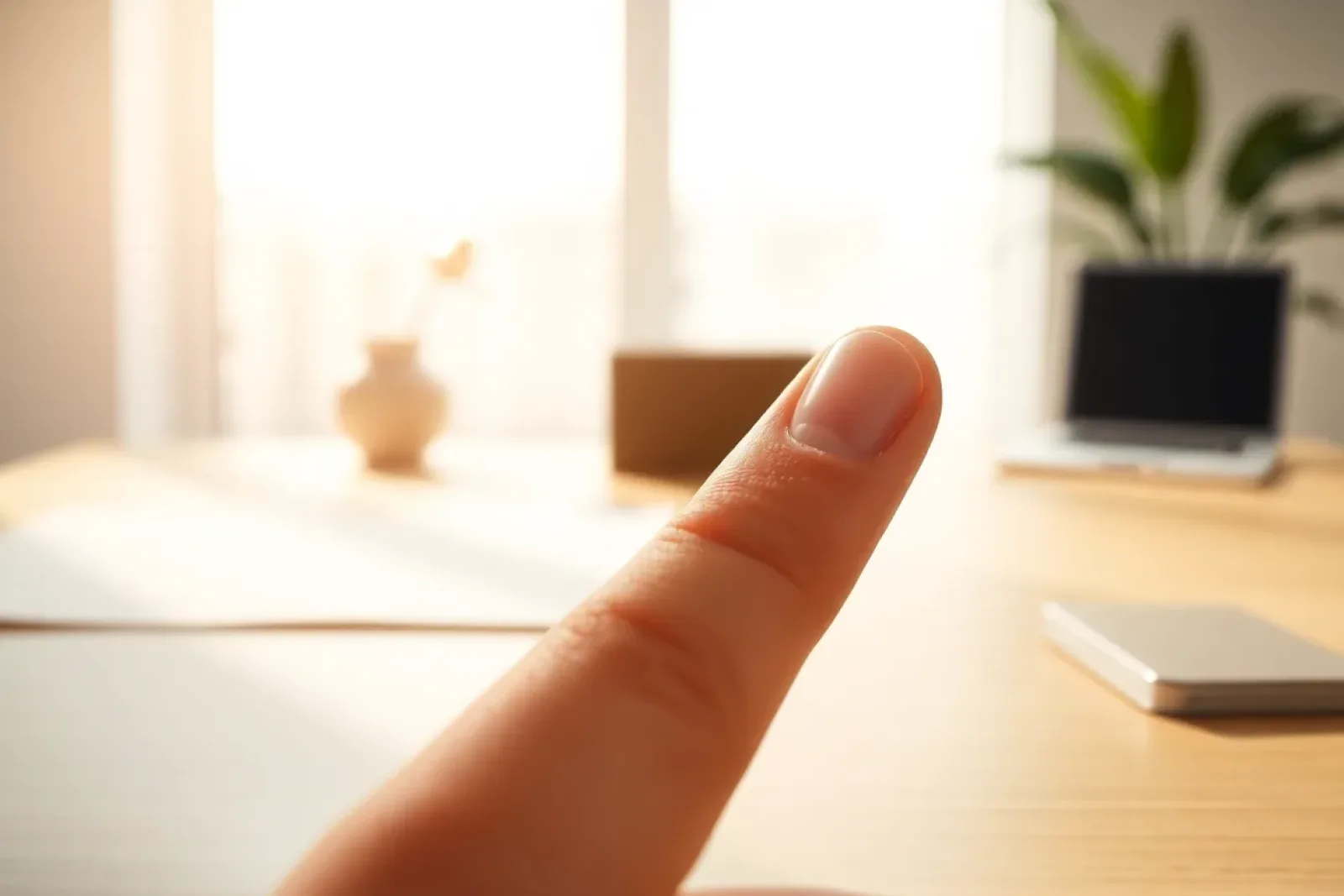
The fold of skin at the base of the nail is living tissue. It has a blood supply, it is sensitive, and it grows back when injured. Its edge sits where skin and nail meet, and that edge is exactly where the downward seal is formed.
From the underside of that fold, a thin transparent layer separates and stays stuck to the nail plate, travelling forward with it. It is dead, it is dry, and it is the reason colour sometimes refuses to hold near the cuticle: product resting on that layer loses its grip the moment the layer lets go.
So in the salon it is precisely that layer that gets removed — softened with a remover product and lifted away with a pusher or a fine bit. It does not hurt, it does not bleed, and it is the actual purpose of the step. Everything beyond it involves living skin.
A simple self-test makes the difference tangible. Push the edge back gently after a shower. What comes away as a fine dry film on the plate is the dead layer. What tightens, tugs or turns uncomfortable is the living fold — and that boundary is easier to feel than most people expect.
One layer is stuck to the nail and gets in the way. The other is a seal. Only one of them is ever removed.
2. What happens when the living fold gets cut
Take something away from the living fold and the skin responds by growing back more assertively. The edge does not become finer over the months, it becomes tougher and more pronounced — and it subjectively needs the same treatment more and more often. That is the loop many people are stuck in when they have it cut every two weeks.
Then there is the edge itself. A cut skin edge is straight and dry, and it splits more readily than one that grew that way. Those splits become hangnails, hangnails get picked, and picking makes the whole thing worse rather than better.
Finally there is the seal. Any injury there briefly opens a route under the nail wall. In everyday life that usually passes without consequence, but it is the reason this area is worked conservatively rather than generously.
People often ask why salon work still looks like cutting. The answer is that the loosened dead layer gathers into a fine strip as it comes away, and that strip looks like a piece of skin. What you are watching is not living tissue being removed but exactly the material that should not stay on the nail.

3. Recognising careful work
There are a few markers you can judge without any expertise — during the appointment and on the following day.
| Observation | What it means |
|---|---|
| Remover applied, then pushed back | the standard, correct route |
| No blood, no sharp pricking | the work stayed on dead tissue |
| Edge calm the next day | a good sign |
| Burning during the work | too close to living skin, speak up |
| Redness or swelling for days | too much removed, have it looked at |
Nippers are not a warning sign in themselves. They belong in trained hands and are used for individual stubborn remnants, not for a lap around the whole nail. The difference lies in the extent, not in the tool.
Related articles
4. What to do at home, and what not to
The most useful habit is also the simplest. After a shower, when the skin is soft, push the edge back gently with a towel or a wooden stick. That is all it needs, and it is all it should be. Twice a week is entirely sufficient.
The second habit is oil. One drop on each nail fold, daily, ideally in the evening. Supple skin splits less often and is easier to work with at your next appointment. It is the only measure that visibly changes the state of your nail edges over a matter of weeks.
Nippers and scissors do not belong in the bathroom cabinet. Without practice the border between dead layer and living fold is almost impossible to hit, and the result is exactly that loop of tougher edges and splits. If you have hard spots, have them released at your appointment — it takes two minutes there.
Order matters too. Oil goes on dry skin in the evening, not onto freshly softened skin straight out of the bath, where it mostly sits on a film of water. And on appointment day, skip it entirely: oil on the nail plate is the single most reliable reason product lifts near the cuticle.
5. When it stops being a cosmetic question
A slightly irritated edge after an appointment is unpleasant but usually gone by the next day. There are signs, though, where waiting is the wrong response: clear redness, swelling, warmth, throbbing pain or fluid under the skin. That belongs in front of a doctor, promptly, rather than at your next nail appointment.
The same applies if a nail fold becomes inflamed repeatedly with no cause you can identify, or if a spot has not calmed down after several days. A salon will not work on an inflamed edge in any case — that is not distrust of you, it is the correct decision.
While everything is unremarkable, the principle is simple: remove little, care for it often. Edges that get oiled regularly and cut rarely look better after a few months than edges worked on every two weeks.
One group deserves a specific mention. If you take blood thinners, live with diabetes or have a known wound healing problem, be more conservative here as a matter of course and say so at the salon. That is not alarmism, it is normal practice: less is done to an edge that heals slowly, and knowing about it helps.
The dead layer on the nail plate is removed; the living fold stays. Anything else buys you tougher edges, more splitting and needless risk. Try one habit for the next two weeks — a drop of oil on each nail fold in the evening — and then look at your edges again.
Booking your infill without a phone call?
This link is meant for your nail studio, not for you. If you would rather set your infill or a new set online, pass it on at your next appointment.