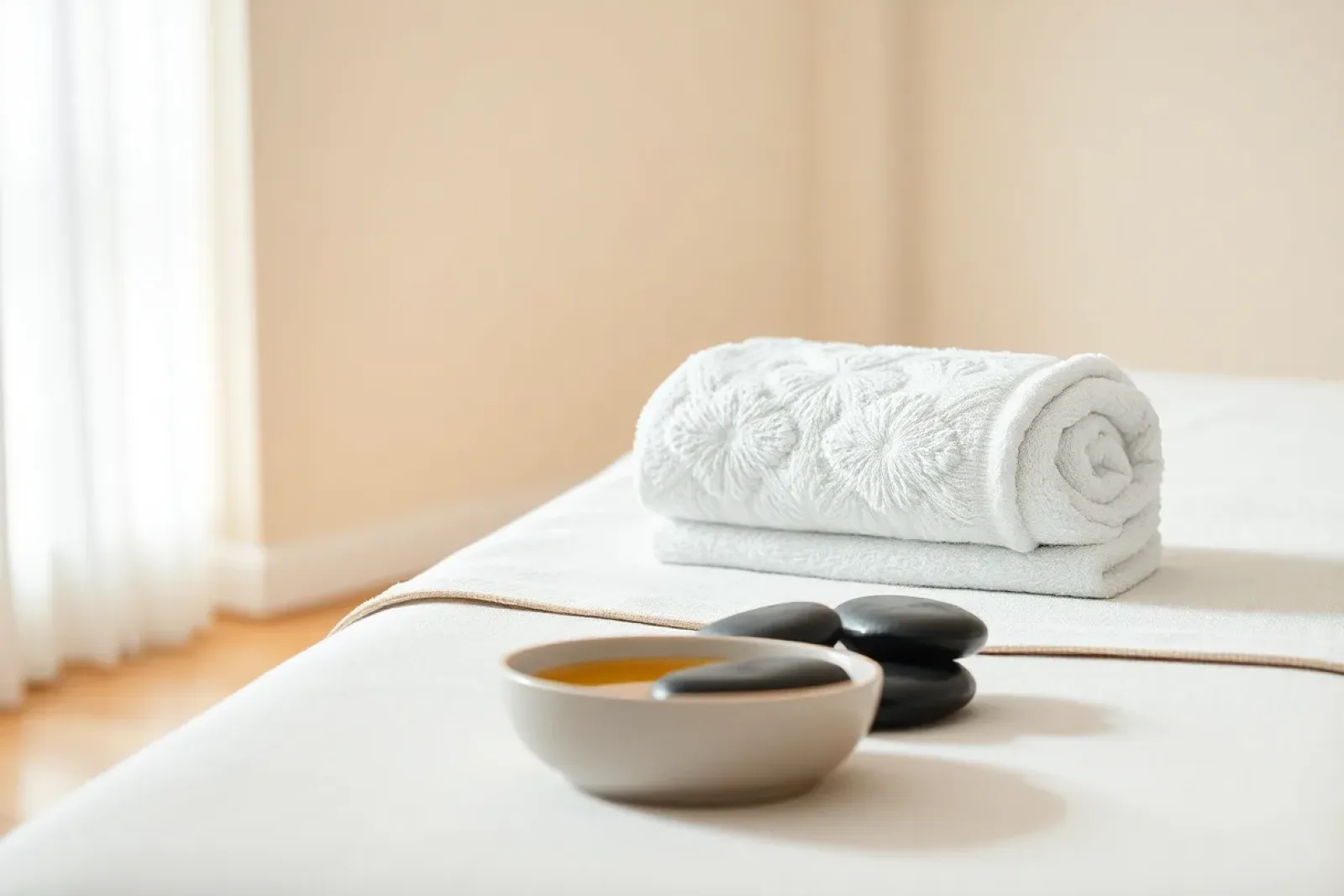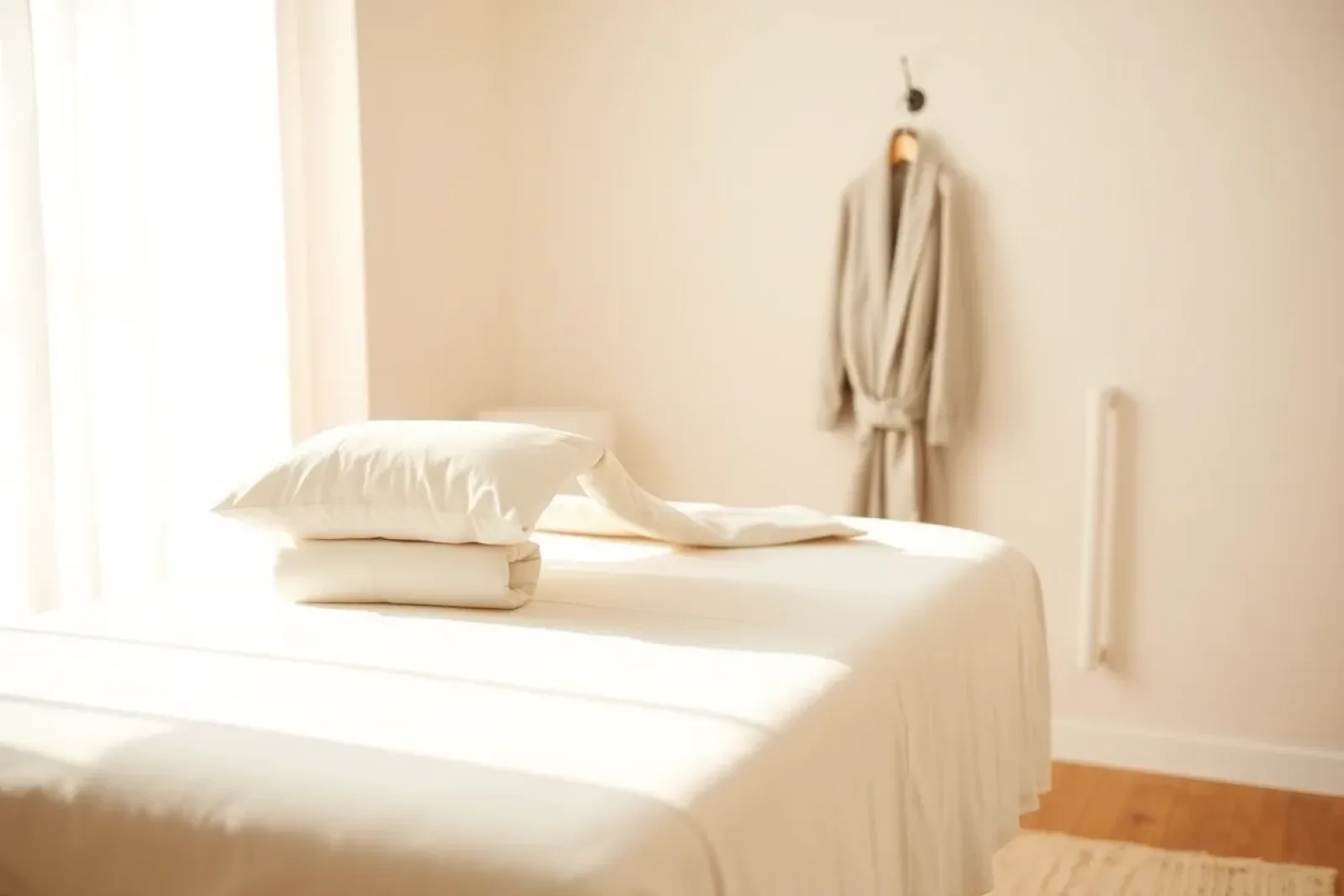
Arrive ten to fifteen minutes early, fill in a short health form, and undress in the treatment room to whatever level you are comfortable with. Underwear can stay on. On the table you are covered throughout, and only the area being worked on is uncovered at any time.
The most common question before a first massage is not whether it will help but what to wear — and the second is whether you have to make conversation. Both take a sentence to answer, and once they are answered very little nervousness survives.
As for the appointment itself, it runs the same way almost everywhere. Learn it once and you can book anywhere, from a small independent practice to a hotel spa, without having to work it out again.
1. Before the appointment
Book with a little notice and say what you want when you book. One sentence is enough: general relaxation, a tight neck, heavy legs. That determines the right treatment and saves you working through a list of names.
Eat something light beforehand but not immediately before. Lying face down on a full stomach is uncomfortable, and an empty one makes some people light-headed. One to two hours ahead is about right.
Drink enough water and skip the alcohol. And do not schedule anything frantic afterwards — a massage does considerably less for you if you are in a meeting twenty minutes later.
Arrive ten to fifteen minutes early. That time is built in for settling, the form and a short conversation. Turning up on the dot means losing it from the treatment instead.
The form asks about conditions, medication, surgery, pregnancy and sensitive areas. Fill it in honestly, even where it feels like a formality. It helps decide whether and how you are treated, and it is the simplest way to avoid an unpleasant surprise.
You stay covered for the whole treatment. Only the area being worked on is ever uncovered.
2. Arriving, undressing, what to wear
The clothing question has an unglamorous answer: undress as far as you are comfortable. For an oil or full-body massage, underwear is usual; keep it on if that feels better, take it off if not. Both are ordinary and neither gets commented on.
You change alone in the treatment room. Whoever is treating you knocks before coming back in, and by then you are already under the sheet. You will be told which way to lie, face down or face up, before they leave.
Some treatments are done clothed. For Thai massage and similar, you wear loose clothing, often provided. For reflexology you take off shoes and socks and nothing else. If you are unsure, ask when you book; the answer takes ten seconds.
Take jewellery off beforehand, along with watches and necklaces. Glasses come off; contact lenses can stay unless you will be face down long enough for them to dry out.
Tie long hair back loosely. And one detail people rarely anticipate: massage oil does not come out of fabric easily. Wear something that can survive a few oil marks.
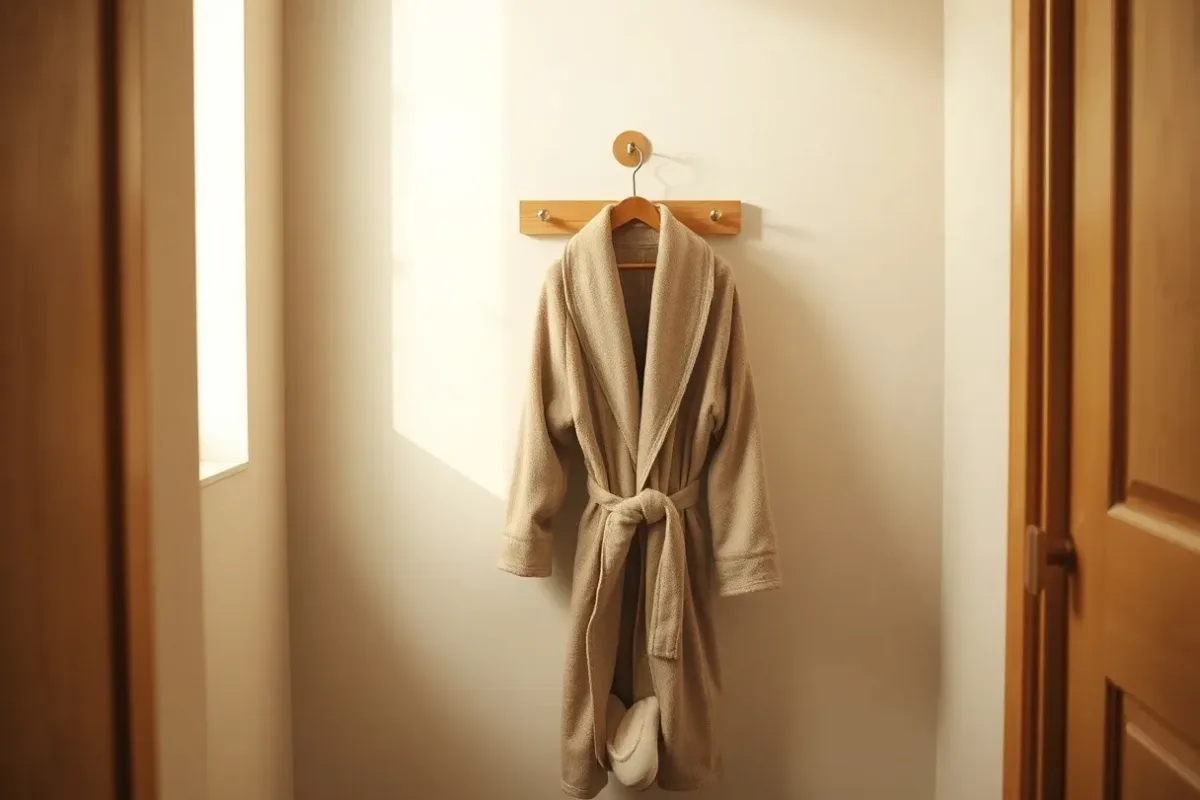
3. How the treatment runs
The table is usually heated, with a face cradle or a neck bolster, and there is a sheet or light blanket over you. That covering stays for the whole treatment, and only the area currently being worked on is folded back. It is called draping and it is standard practice, not politeness.
Most treatments start face down with back, shoulders and neck, then arms and the backs of the legs. Around halfway you are asked to turn over, and the sheet is held up so you can turn without being seen.
Oil is warmed in the hands rather than applied cold. If the room temperature, the music or the volume bothers you, say so — all of it changes in seconds and nobody minds.
You do not have to talk. Most people say a few sentences at the start and are quiet after that. If you would rather chat, that is fine too, but you are under no obligation — including no obligation to stay awake. Falling asleep is common and not a mishap.
Two small things happen often and nobody mentions them: your stomach may get loud, because the body has switched into recovery mode, which is a good sign and embarrasses nobody; and the face cradle leaves a mark for about twenty minutes. Both are part of it and happen several times a day in every practice.
| Part | Roughly | What happens |
|---|---|---|
| Arrival | 5 to 10 minutes | form, short conversation |
| Changing | 2 to 5 minutes | alone in the room, then under the sheet |
| Back of the body | about half the time | back, shoulders, neck, legs |
| Turning over | 1 minute | the sheet is held up for you |
| Front of the body | about half the time | arms, legs, sometimes head and face |
| Resting | 5 to 10 minutes | stay lying down, get up slowly |
Related articles
4. What you are allowed to say
Four things can be raised at any point, and none of them is rude. First, pressure: too firm, too light, less on that spot please. Second, temperature: too warm, too cool, a bolster under the knees. Third, areas: leaving out the stomach, glutes, head or feet is a completely ordinary instruction. Fourth, the music and how loud it is.
Say it early rather than late. Plenty of people endure the first twenty minutes and only then realise the treatment is passing them by. One sentence at the start would have fixed it.
You will also be asked during the treatment, usually about pressure. Answering "that is fine" when it is not is the single most common reason for a disappointing appointment.
Also worth saying: if you feel dizzy, nauseous or unwell, if a technique hurts rather than merely being intense, or if you need a pause. All of it happens and all of it is handled routinely.
And a word about the frame around it: a massage is a professional service with clear boundaries. Areas you exclude are excluded, and you may say at any point that something is not okay with you. If a situation feels wrong, you end the appointment. That is your right and it needs no justification.
5. Afterwards
Get up slowly. Your circulation needs a moment, and standing up as if getting out of bed is the usual cause of a brief head rush. Most places build in a few minutes of rest; use them.
The oil stays on your skin for a while, and that is deliberate: it carries on working. If it bothers you, shower it off, but not straight away — half an hour later is plenty. It is more annoying in hair than on skin, which is why it is worth excluding the scalp if you have somewhere to be afterwards.
Have a drink. The often-repeated claim that massage flushes toxins out does not stand up. What is true is that people are frequently thirsty afterwards, and water is a good idea regardless.
Expect to be tired. Many people feel pleasantly heavy afterwards and sleep better that night. After firmer work the area can feel like the day after training — normal, and gone within a day or two.
Skip heavy exercise, sunbathing and alcohol for the rest of the day. A warm bath or a short walk suit it much better.
On paying and tipping: every venue handles it differently, and conventions vary enormously between countries. In much of the United States a tip in the region of fifteen to twenty per cent is customary at a spa; in the United Kingdom ten per cent or nothing at all is normal; in parts of Asia tipping can be actively unwelcome. Ask at reception what is usual if you are not sure — it is a completely normal question.
Arrive early, fill the form in honestly, undress as far as suits you, stay under the sheet and answer honestly about pressure — that is genuinely the whole thing. If you do not know which treatment to pick, describe what you want when you book rather than choosing a name off the menu.
Consultation and appointment without a phone call?
This link is meant for your studio, not for you. If you would rather handle the consultation, the deposit and the follow-up online, pass it on at your next appointment.