Watch three things. Needles and cartridges come out of sealed packaging in front of you, every surface that gets touched is wrapped, and gloves are changed at every interruption. If those three hold, the rest usually does too. If one of them does not, leave.
Tattooing breaks the skin, which makes hygiene a safety question rather than a comfort one. The good news is that you need no specialist knowledge to judge a studio. The things that matter are visible, and you are entitled to look at them.
The less good news is that a studio can look immaculate and still work badly, while a plain room with worn furniture can hold excellent standards. So it pays to look at the right things rather than at the decor.
1. What you can see before you ask anything
First impressions carry more weight than you might think. Is the floor clean, are the surfaces free of crumbs and coffee cups, is there used paper towel lying about? A studio that keeps its reception tidy generally keeps its workstation tidy too.
Notice the smell. A faint trace of disinfectant is normal and a good sign. Stale, musty air is not. Equally important: is the working area separated from the waiting area? Where clients, visitors and tattooing all share one room, staying clean becomes much harder.
An easily missed detail is the floor under the workstation. It should be smooth and mopped, not carpeted. Carpet in a tattooing area is a clear signal that this place is not working to the usual standards, because it simply cannot be disinfected.
Look at where waste goes, too. A closed trash can for general waste and a rigid, sealable sharps container both belong visibly at the workstation. An open wastepaper basket beside the chair is a warning sign.
And animals have no place in the working area, however charming the studio dog is. In reception it is a matter of taste. Next to the chair it is not.
What you can safely ignore is the styling. A studio with old armchairs and posters on the wall can work impeccably; a designed one with concrete walls and expensive lighting can be careless. Hygiene shows in procedure, not in furniture. Judging by appearance means judging the wrong thing — and missing precisely the points you could have checked in two minutes.
You are allowed to watch the needle come out of its packet. Anyone unwilling to show you that has already answered the important question.
2. The workstation: what has to be right
This is where a close look pays, and there is nothing wrong with watching for a few minutes. The table covers what you can check without any specialist knowledge.
| Item | What right looks like | Warning sign |
|---|---|---|
| Needles and cartridges | sterile packaging, opened in front of you | already opened and laid out |
| Surfaces | chair, machine, cables and lamp wrapped | bare surfaces, old tape residue |
| Gloves | fresh, changed at every interruption | gloved hands on phones and door handles |
| Ink | decanted into single-use caps, leftovers binned | caps saved for the next appointment |
| Shaving | single-use blade, discarded after | a razor used more than once |
| Hand washing | a sink within reach, hands-free dispensers | no sink in the working room |
| Waste | rigid sharps container, closed trash can | open basket, loose needles |
The first row matters most. Opening a sealed packet is a visible, unambiguous act, and any decent studio performs it in front of you as a matter of course. If someone explains that it was prepared earlier, that is not efficiency — it is an answer to the question you were actually asking.
The second row rarely registers with clients but says just as much. Everything touched during the work — machine, cables, spray bottle, lamp handle, tray — gets wrapped or given a disposable cover beforehand. Doing that consistently means thinking in terms of transmission. Doing it only for the machine means missing the point.
A third thing is easy to overlook: what happens between appointments. The station is rebuilt from scratch — wrap off, surfaces disinfected, rewrapped, fresh equipment unpacked. That takes ten to twenty minutes, which is why appointments are not stacked back to back. If you watch someone finish and are asked to sit down two minutes later, that is not a good sign.
3. Single-use or sterilised
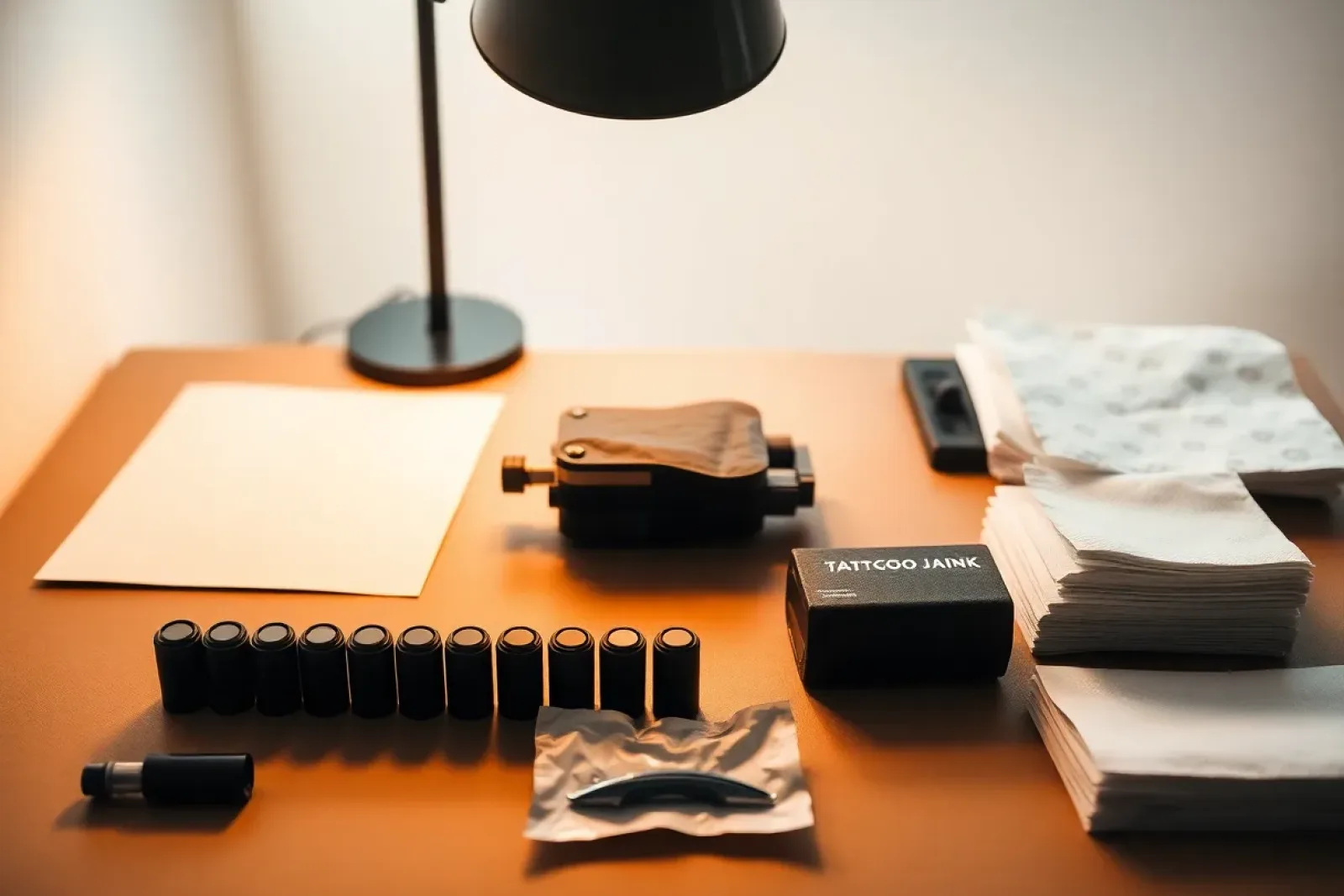
Most studios now work largely with single-use equipment: needle modules arrive sterile-packed, grips are disposable, ink caps and towels are binned after every appointment. That is the simplest and safest route, and you recognise it by how much packaging the work generates.
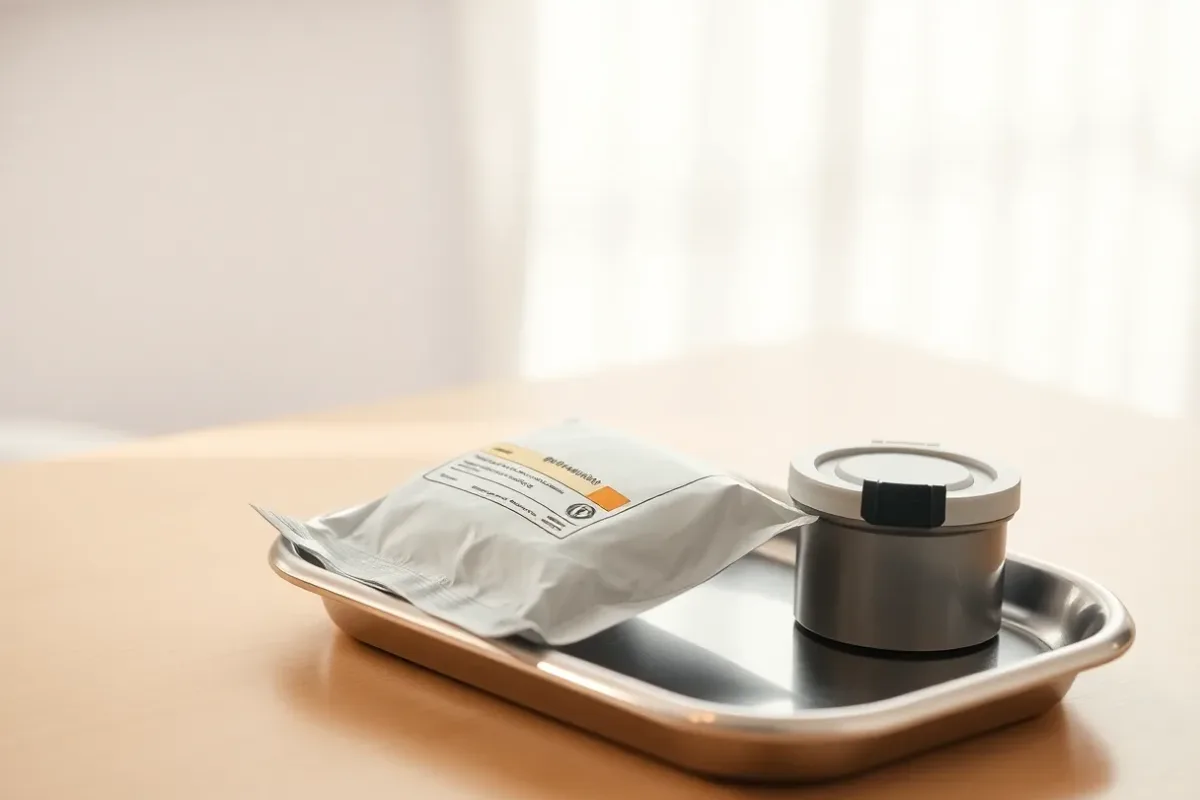
Where reusable parts are still in play, an autoclave belongs with them — a steam steriliser that works under pressure. A hot-air cabinet or a disinfectant bath does not do the same job. Studios running an autoclave document that it works, and you may ask about it; in a good studio the answer comes without hesitation.
You can see it in the packaging too. Sterilised items carry an indicator that changes colour once the cycle has run, along with a date. Pouches like that are a good sign.
What is never reused, however well cleaned: needles, cartridges, ink caps, razor blades, gloves and towels. There is no exception and no economy version of this rule.
On ink itself: within the European Union, tattoo inks have been subject to a dedicated chemicals restriction since 2022 that excludes certain substances. Outside the EU the picture differs, and in some markets ink is regulated far more loosely. Wherever you are, a studio working properly can tell you which ink it uses and show you the safety data sheet. Keep that information — if a skin reaction turns up later, it helps whoever assesses it.
It is also fine to ask how the room itself is cleaned. Surfaces, the chair and door handles get wiped down between appointments, floors are cleaned daily, and textiles are changed rather than wiped. None of this is yours to inspect, but a well-run studio answers the question in two sentences without bristling, and that response is really what you are after.
Related articles
4. Paperwork, consent and who inspects
A proper appointment starts with questions. The consent and medical history form normally covers allergies, conditions, medication, clotting, pregnancy and skin conditions. If nobody asks, a substantial piece of care is missing.
Along with it comes an explanation of what will happen, what the risks are and how aftercare works. You should get that aftercare in writing, or at minimum as clear spoken instructions. "It is all online" is not a briefing.
Who oversees any of this is rarely settled at national level, and it varies more than people expect. In the United Kingdom, tattooists and their premises must be registered with the local authority, and the registration certificate is displayed on the wall — so it is worth glancing at. In the United States, licensing and inspection sit with state or county health departments. In Australia and Canada it varies again by state and province, and in Spain by comunidad autónoma. A few countries do run one national mechanism — the Netherlands licenses studios through the GGD and lists every holder publicly — but assuming yours does is the mistake.
Because of that, look for the local mechanism rather than a universal seal of approval. Ask the studio which authority registers or inspects them; a legitimate one answers immediately and often points at the certificate. Association logos and training badges are not the same thing — they may be meaningful, but they are not a licence.
The same applies abroad. If you get tattooed on vacation, the rules there are different, sometimes stricter and sometimes far looser. Do not assume the arrangements from home follow you. Apply the visible criteria in this article instead — they work anywhere, because they judge the working method rather than the paperwork.
5. Warning signs, and what to do about them
Some things are not worth debating. You leave, forfeit the deposit at worst, and have probably saved money.
- Needles already open, or packaging that is not opened in front of you.
- Gloves that have been on a phone, a door or somebody's hair and are not changed.
- Ink caps that have visibly been used before.
- No medical history form and no questions about health or medication.
- Visible drinking by the staff, or being offered a drink yourself.
- Pressure to decide on the spot, especially for designs you first see in the studio.
- Tattooing outside a room set up for it — conventions and events are held to the same requirements, not fewer.
If something bothers you during the appointment, say so. Almost everyone in this trade responds matter-of-factly, because that is how they were taught. An irritated or dismissive reply to a polite question is itself an answer.
And if something goes wrong afterwards — spreading redness, fever, increasing pain, cloudy discharge — the next step is a doctor, not the studio. Tell the studio afterwards anyway, and ask which ink and equipment were used. That detail can help whoever is assessing it.
Packaging opened in front of you, everything wrapped, gloves changed without exception, and health questions on paper: those four points identify a clean studio without any specialist knowledge. Call in before you book and watch a piece being worked on — it is the most reliable check available to you.
Consultation and appointment without a phone call?
This link is meant for your studio, not for you. If you would rather handle the consultation, the deposit and the follow-up online, pass it on at your next appointment.