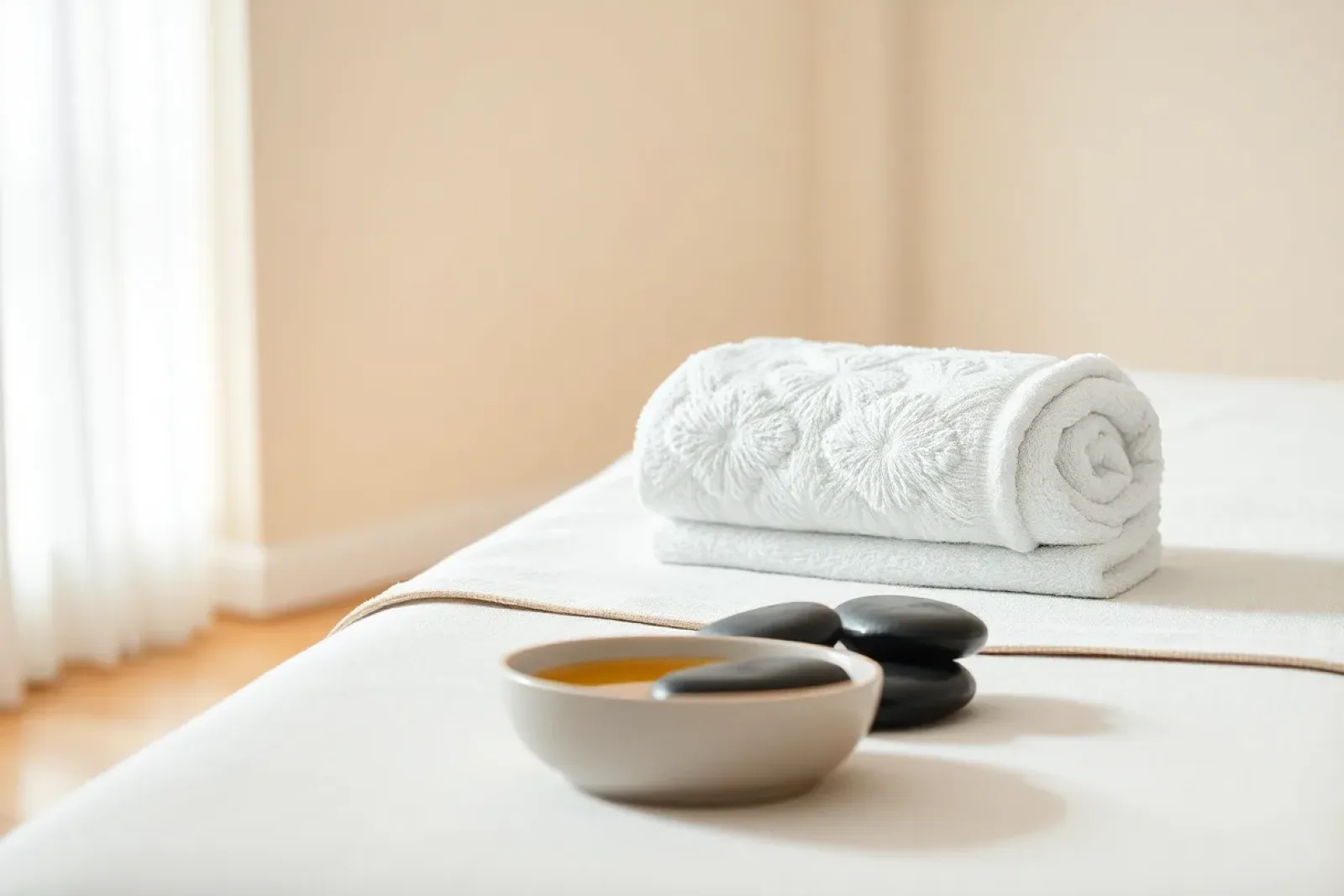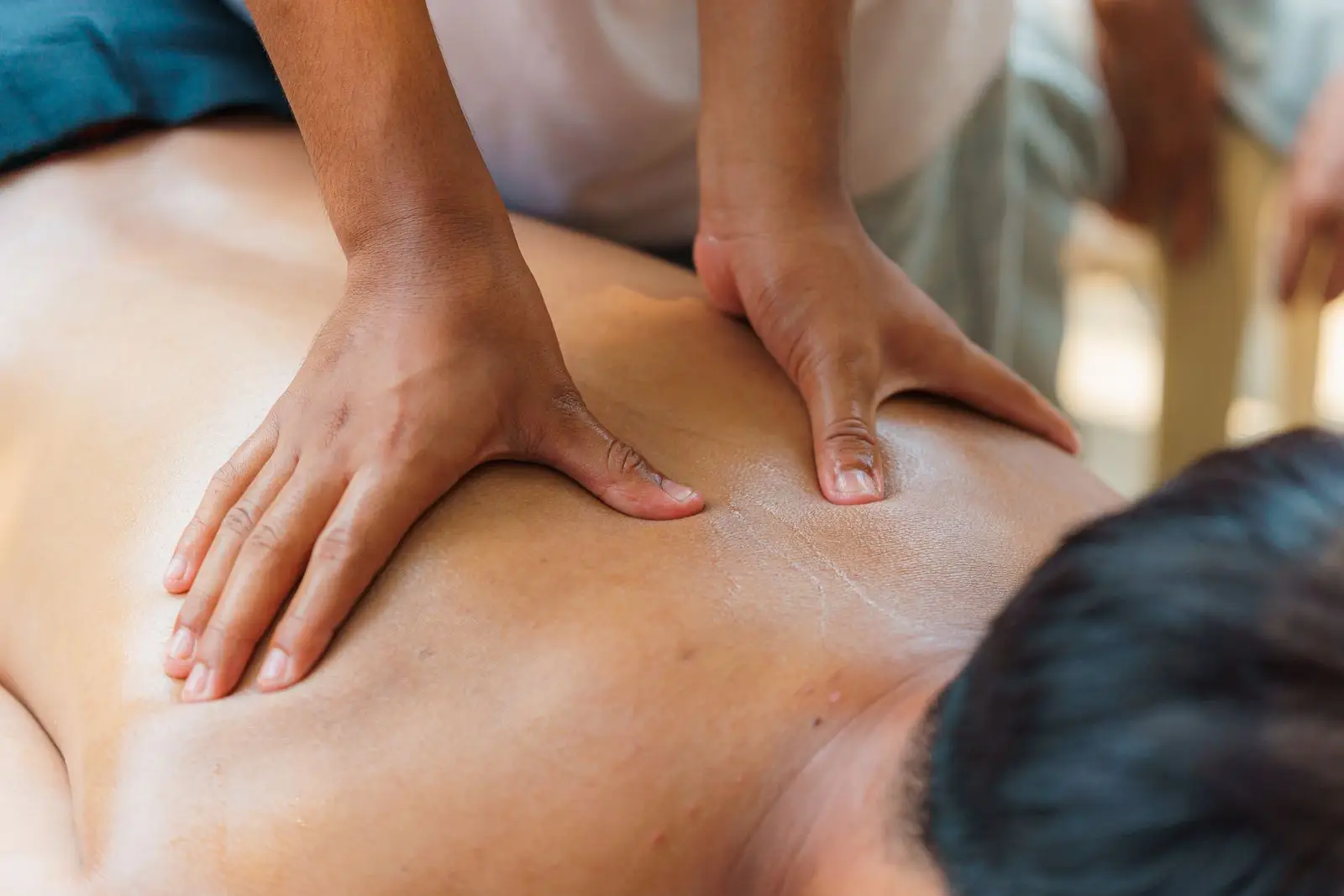
A relaxation massage works broadly, slowly and at medium pressure, and its aim is to settle you down. Deep tissue works one area, slowly and firmly, and its aim is a stubborn patch of tension. They take a similar amount of time and feel nothing alike.
The two sit side by side on almost every spa menu, often only a small price difference apart, and they read like two intensity settings of the same thing. They are not. They are different ways of working towards different ends, and booking the wrong one gets you a perfectly good treatment for a problem you do not have.
The mistake runs both ways. People whose neck has been locked for two weeks book the soothing option and leave disappointed that it only helped for an evening. And people who wanted an hour of quiet book deep tissue because it sounds more effective, then spend that hour braced against the table.
1. What each one actually does
A classic relaxation massage uses long gliding strokes, kneading and rhythmic work over larger areas. It follows a set sequence — usually back, shoulders, neck, arms and legs — and leaves very little out. Pressure stays in the middle range and the pace is even and unhurried.
Most of the effect comes through the nervous system. Repeated, predictable touch lowers arousal, breathing deepens, and a good number of people drift off. For everyday stress that shows up as general stiffness, that is exactly the right approach.
Deep tissue goes about it differently. It finds a specific region, works there slowly and with considerably more pressure — often with forearm, elbow or thumb — and stays on individual spots for a long time. Large parts of the body are not touched at all, because the time is needed where the problem is.
The aim here is not calm but the mobility of a particular structure. That is also why there is more conversation: the work needs your feedback on where it sits and how much pressure is still useful.
Both are wellbeing services rather than healthcare. Deep tissue is not more clinical simply because it is firmer. If there is a condition behind the tension, the person to see is a clinician, not a spa.
One more misunderstanding is worth clearing up: "deep" describes the layer being worked, not how hard someone leans on you. Good deep work goes slowly and waits for tissue to give way rather than forcing through it. Bruises afterwards are not a sign of a thorough massage but of a crude one. The tell is simple enough — with skilled work your breathing stays even, however intense it gets.
One treatment lowers the tension across the whole system. The other goes to one place. Both work — just not as substitutes for each other.
2. How the two appointments feel
The soothing version runs quietly and largely to a pattern. You say at the start where you are sensitive and where you would rather not be touched, and after that there is not much talking. Music, low light and warmth are part of it. Plenty of people need a few minutes at the end to come back round.
The deeper version is a more active appointment. You get asked things, you answer, the pressure gets adjusted. Individual spots are distinctly noticeable — usually described as a "good" kind of sore, intense but not sharp. That is the line worth knowing: pressure that makes you hold your breath, push away or brace against it is too much. Bracing works against the treatment.
A practical difference: with deep work it pays to book less area and more time. An hour on the back achieves more than an hour of full body in which the neck gets ten minutes.
Preparation differs too. Before a relaxation treatment there is nothing to do beyond arriving on time and not overly full. Before deep work it helps to arrive warm — a short sauna or a hot shower beforehand makes tissue more workable and the session more comfortable. Cold, guarded muscle resists any pressure, and no amount of skill substitutes for warmth and time.
In both cases: say so immediately if something is unpleasant. No outcome improves because somebody gritted their teeth through it.
3. The two side by side
The figures below are typical orders of magnitude. Prices vary widely by location and venue, but the relationship between the two usually holds.
| Criterion | Relaxation massage | Deep tissue massage |
|---|---|---|
| Pressure | light to medium | firm, targeted |
| Area covered | broad, often full body | one or two regions |
| Aim | calm, sleep, stress relief | stubborn tension, mobility |
| Usual length | 50 to 90 minutes | 50 to 80 minutes |
| Typical price | the studio’s standard hourly rate | roughly a fifth above the relaxing rate |
| Conversation during | very little | regular |
| The next day | usually nothing | often a mild ache |
| Sensible rhythm | every 2 to 6 weeks | closer together at first, then spaced out |
Two notes. The price gap is rarely about materials; it reflects time and the fact that deep work is physically demanding for the therapist. And the clock is deceptive: sixty minutes of deep tissue almost always feels longer than sixty minutes of relaxation.
Related articles
4. Who is better served by which
Choose the soothing version if you are tired, wired, sleeping badly, and cannot point at one spot so much as describe a general stiffness. It is also the better option if you are sensitive to pain or if this is your first massage at all.
Choose the deeper version if you can put a finger on it. It has been there for weeks, it worsens under load, and an ordinary massage helps for one evening. The usual suspects are neck and shoulder blades from screen work, the low back from standing all day, and calves in runners.
If you cannot decide, book the relaxation treatment and say at the start where your focus is. Most therapists work flexibly within a sequence and will simply spend longer on the affected region — without needing the most intense option on the menu.
There is also the combination, and it is frequently the best answer: a soothing opening to make the muscle workable at all, then twenty to thirty minutes of targeted work, then a calm finish. Ask for it if it is not on the menu; many places do it at no extra cost.
What is not a good idea is asking for the strongest option at a first appointment on the theory that more pressure means more effect. It does not. Muscle that fights back does not release; it gets irritated.
One more thing worth checking on price: how much of the stated time is hands-on. Some venues count changing and resting time inside the advertised duration and some do not, so a "sixty-minute treatment" can mean fifty or sixty minutes on the table. With deep work that difference is noticeable. Ask plainly when you book — the answer tells you more about value than any description on the menu.

5. Afterwards, and the limits
A mild ache after deep work is normal. It usually starts in the evening, peaks the next day and is gone within a day or two. Water, gentle movement and warmth make it more comfortable; heavy lifting the same day does not.
What is not normal: sharp or stabbing pain during the treatment, symptoms travelling down an arm or leg, numbness, pins and needles, or bruising. Say the first straight away; the rest belongs in front of a clinician.
Some situations rule out deep work even where a gentle treatment would still be fine: blood-thinning medication without clearing it first, known clotting disorders, active inflammation, fresh injuries, and a leg that is swollen on one side, warm or red. That last one needs assessing the same day and should not be massaged at all.
In pregnancy, relaxation work with adjustments is common, while deep work on the legs and low back is not something to arrange on the spot. Ask in advance whether the venue has experience with it rather than sorting it out at the door.
And a word on expectations: a single deep tissue session rarely resolves something that built up over months. It buys room. What makes the difference is usually several appointments spaced closer together, combined with a change to the cause — how you sit, how you load it, how often you stop.
Relaxation works broadly and calms; deep tissue works one place. If you can point at the problem, take the second; if you cannot, take the first. And if you need both, ask for the combination — it is rarely printed on the menu and offered almost everywhere.
Consultation and appointment without a phone call?
This link is meant for your studio, not for you. If you would rather handle the consultation, the deposit and the follow-up online, pass it on at your next appointment.